Home › Blog › Assam vs Darjeeling and the Nilgiris
Assam Tea Gardens vs Darjeeling and the Nilgiris
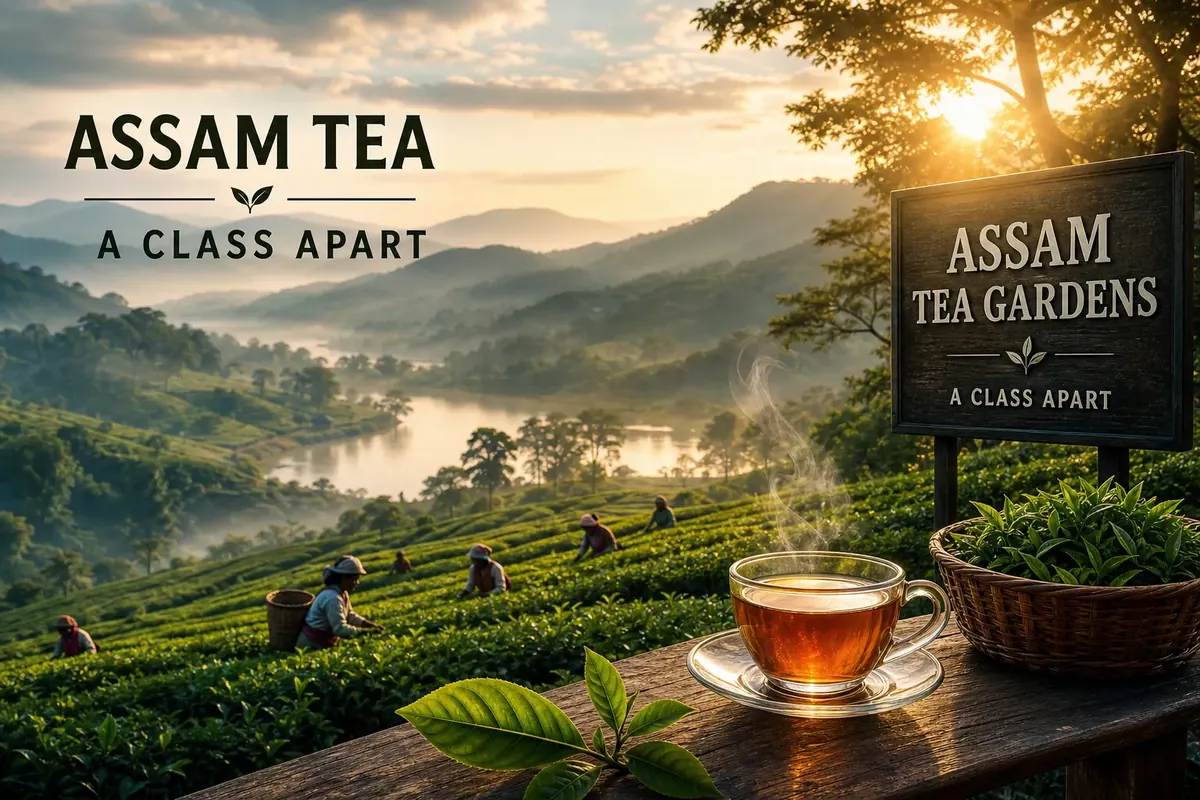
Most comparisons of Indian tea are really comparisons of geography. The same plant grown at 60 metres and at 2,000 metres does not taste the same, and no amount of processing closes the gap. That is why Darjeeling can be delicate and muscatel while Assam is malty and thick, and why neither is a better version of the other.
This guide sets out what actually differs, which Assam estates are worth the drive, and how to see one from Guwahati without wasting a day on logistics.
At a glance
| Region | Where it grows | Style | In the cup |
|---|---|---|---|
| Assam | Brahmaputra valley floodplain, near river level | About 89% CTC, 11% orthodox | Malty, strong, deep colour, good with milk |
| Darjeeling | Himalayan foothills, high and cool | Almost entirely orthodox | Light, floral, the muscatel note buyers look for |
| Nilgiris | Western Ghats plateau, mid altitude | Roughly 90% CTC | Bright and brisk, lighter body than Assam |
Why the floodplain decides the cup
The Brahmaputra valley is low, hot and wet. Monsoon rain arrives in volume, the river leaves alluvial deposits across the flats, and the result is soil that grows a large, dark leaf with more strength in it than the same bush produces in thin mountain air.
Darjeeling works with the opposite set of conditions: altitude, cool nights and mist, which slow the leaf down and produce the aromatics the region is known for. The Nilgiris sit in between, on a plateau that gives a cleaner, brighter cup than Assam but less body.
None of this makes one region superior. It makes them suited to different cups. If you drink tea with milk and want it to stand up to milk, Assam is doing the work. If you drink it plain and want perfume, you are looking at Darjeeling.
Assam came first
Commercial tea in India started in Assam, not in the Himalayas. Robert Bruce came across tea being used by Singpho communities in the 1820s. By 1838 Assam tea had been shipped to London, and the Assam Company was formed in 1839. Darjeeling and the Nilgiris followed fifteen to twenty years later.
That history is still visible on the ground. Several working estates date from the 1830s to 1860s, with colonial bungalows, old factories and machinery that has been in more or less continuous use since. A visit to one of these is a look at an industry before it became a tourism product.
CTC and orthodox: what the 89% means
CTC stands for crush, tear, curl. Machines cut the leaf into small granules that brew strong and fast, which is why most chai in India is CTC. Orthodox tea is rolled as whole or broken leaf and gives a more layered cup, at a higher price and in smaller volumes.
Assam produces both, and the orthodox minority is where the expensive tea sits. Halmari in Dibrugarh is known for golden-tipped orthodox with honeyed depth. Manohari Gold, from Manohari Tea Estate, is hand-plucked from spring buds and has fetched record prices at auction. Dikom, founded in 1875, grows mostly clonal bushes and makes tippy malty orthodox. Darjeeling, by contrast, is almost entirely orthodox, and the Nilgiris mirror Assam's CTC dominance.
If you taste both styles side by side on an estate, the difference is obvious within one sip: the CTC is blunt and strong, the orthodox has layers that keep opening as the cup cools.
Which Assam tea gardens are worth visiting
All of these are working estates, not attractions. Access is by arrangement, and factory tours depend on what the factory is doing that day.
- Amchong, Kamrup district. The closest structured visit to Guwahati, with Gold, Platinum and Black Diamond packages sold through TripAdvisor and Viator. Listings put them at roughly ₹999 to ₹2,499 per adult, with the longer packages including a vehicle tour of the garden. Confirm current prices and factory access when you book.
- Corramore, Udalguri district. Founded by the planter Robert Logan in the 1860s. Heritage bungalows and machinery accumulated over 150 years of continuous cultivation.
- Monabari, Biswanath district. A single stretch of roughly 1,367 to 1,800 hectares, which is the easiest place to understand the scale of an Assam garden.
- Namsang. One of the oldest gardens, founded in 1837, with about 277 bird species recorded inside its boundaries.
- Chota Tingrai, Tinsukia district. Family-run, and had converted about a third of its garden to organic cultivation by 2016, while protecting hornbill habitat.
When to go
April and May are the best months. The first flush is active, pluckers are working the rows, and the factories are running. April is usually more comfortable; late May brings the second flush and the heat that goes with it.
October and November are the second window. The gardens are still green after the monsoon, the light is better for photographs, and the autumn flush is underway at a lower intensity. December to February is dormant: bushes pruned, plucking stopped, demonstrations limited. A winter visit is a landscape and bungalow trip, not a harvest one.
Getting there from Guwahati
Guwahati is the practical gateway. LGBI Airport sits on the western edge of the city, and most of the estates that accept visitors are between one and four hours away by road, east along NH27 or west towards Bongaigaon.
If you are flying in, the useful base is on the airport side rather than in the city centre, because a 7 am departure east avoids both the traffic and the extra hour. Hotel Shiny Grand is 1.7 km from the terminal, about five minutes, with a 24-hour desk and one complimentary one-way airport transfer (pickup or drop) on direct bookings.
Read next: planning a tea garden day trip from Guwahati, or the full guide to Assam tea gardens near Guwahati.
What a visit actually involves
A normal visit runs two to three hours: a walk through the rows with someone who works the garden, the factory if it is running, and a tasting at the end. The tasting is usually the part people remember, because first flush and second flush, tasted one after the other, explain more than any label.
Wear closed shoes. The rows are muddy for much of the year. Ask before photographing workers, and stay on the paths you are shown. These are workplaces first.
FAQ
- Is Assam tea better than Darjeeling tea?
- They are different, not ranked. Assam is low-grown, malty and strong, and most of it is CTC for milk tea. Darjeeling is high-grown, light and floral, and almost entirely orthodox. Which is better depends on whether you drink your tea with milk.
- What is Assam tea known for?
- Malty strength and a deep colour, from a large-leaf variety grown on the Brahmaputra floodplain. About 89% of Assam's output is CTC, which is why most Indian breakfast tea tastes the way it does.
- When is the best time to visit Assam tea gardens?
- April and May, when the first and second flushes are being plucked and the factories are running. October and November are the comfortable alternative. December to February is dormant.
- Do you need to book an Assam tea garden visit in advance?
- Yes. These are private working estates and most do not accept walk-ins. Arrange the visit, and confirm whether the factory is running on your date, before you travel.
Flying in for the gardens?
Hotel Shiny Grand, 1.7 km from LGBI Airport in Borjhar: rooms from ₹2,500, free breakfast on direct bookings, one complimentary one-way airport transfer (pickup or drop), and an early breakfast before a 7 am start.
Book on WhatsAppAddress: Shyam Nagar, VIP, near LGBI Airport, Borjhar, Guwahati, Assam 781015
Phone / WhatsApp: +91 91815 56418
Airport: 1.7 km, about 5 minutes · 24-hour front desk · free parking
Rooms: 35, from ₹2,500 a night, four types · breakfast included on direct bookings
Catering and events: 100-guest banquet hall, Silver, Gold and Platinum menus