Home › Blog › Food Catering GST Rate in India: 5% or 18%?
Food Catering GST Rate in India: 5% or 18%?
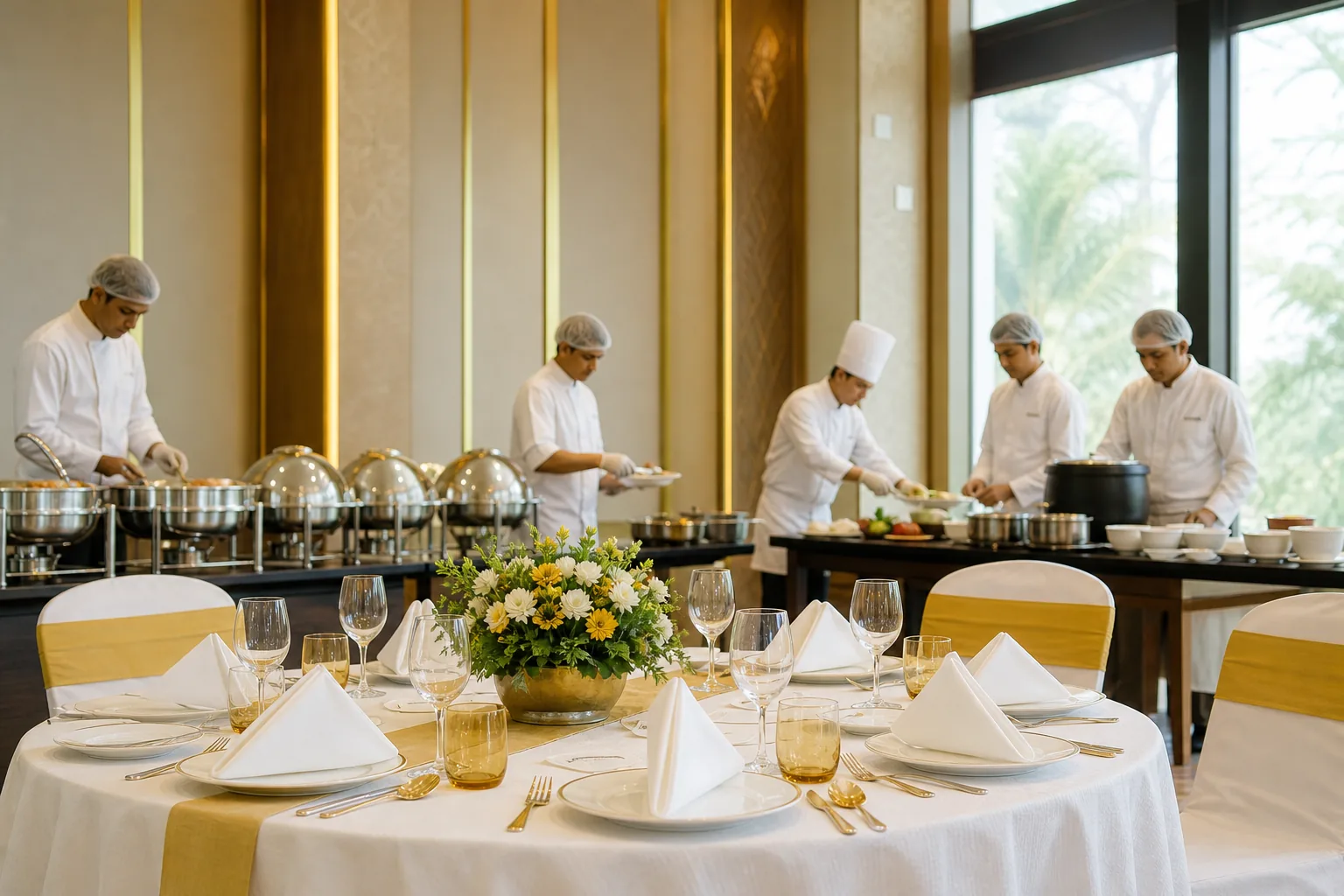
Is the food catering GST rate 5% or 18%? It depends on what the supplier is billing: a meal service, a hotel package, or food with a venue rental can fall into different categories. For an event organiser, the useful first step is to check the service classification and tax treatment on the written quote, not judge the bill by the food alone.
Food catering GST rate in India: the basic picture
There isn’t one GST rate for every meal supplied at an event. A standalone restaurant service may be taxed at 5% without input tax credit (ITC), while some services involving a hotel or an event venue may be taxed at 18%. The rate depends on the service being supplied and the conditions that apply to it.
Think of the bill as a description of the deal. If it covers only prepared food, the supplier may classify it differently from a contract that includes event space and catering. A hotel package can also need a closer look, especially when accommodation is part of the arrangement.
GST rate information is a useful starting point for checking rate entries. But a rate table alone won’t classify a specific booking. The agreement and invoice need to show what the supplier has agreed to provide.
For event planning, keep these categories in mind:
- Restaurant or takeaway food: food supplied as a restaurant service can be subject to 5% without ITC, depending on the applicable entry.
- Hotel catering: catering at a “specified premises” (a hotel where any room was supplied above Rs 7,500 per day in the previous financial year, or that opted in) is taxed at 18% with ITC. Outdoor catering elsewhere is generally 5% without ITC.
- Venue with food service: a venue rental combined with catering may be treated differently from food supplied on its own.
These are broad guideposts, not a tax ruling for your booking. The exact classification matters more than the word catering on a menu or quote.
If you’re weighing venue scope as well as the food, the banquet and wedding venue details can help you see what to clarify when you ask for an event quote.
Why catering may be taxed differently from restaurant food
A restaurant meal and event catering can look similar on the plate. For GST, though, the question is what the supplier is contracted to do. A meal served as a restaurant service is one kind of supply. A catered event with a hired hall or hotel facilities may involve more than food.
That distinction matters when a quote bundles several services. If the contract includes food plus use of an event space, the supplier may need to classify the package as a venue-related service or a composite supply. The terms on the quote, the way charges are shown, and the applicable GST entry all affect the answer.
Check the relevant GST information for service categories and rates. The key test for hotels is the specified-premises rule, which turns on the Rs 7,500 room value. Don’t assume the 18% rate applies to every hotel banquet. Ask how the supplier has classified your specific service.
ITC is the tax a registered business may be able to claim on eligible business purchases, subject to GST rules. A higher rate with ITC can be relevant to a corporate buyer, but it does not automatically make the final cost lower. The claim depends on the buyer’s eligibility and the transaction’s documents.
For an individual or family paying for a celebration, ITC may not be useful. For a company arranging a meeting, the accounts team may care about it. In either case, ask for the rate, the service description, and the ITC position in writing before the advance is paid.
Also separate food from packaged or ready-to-eat items where the invoice does so. Goods and services can be classified differently, so don’t apply a restaurant-service rate to every item simply because it appears on a catering estimate.
How GST is shown on a catering bill
A useful event invoice makes it easy to see the taxable value, the GST rate, the tax amount, and the total payable. It should also identify the supplier and describe the service in terms that match the booking. When food and hall charges are shown separately, the quote should make clear how each line is treated.
Before you approve the bill, check whether the quoted per-plate figure is before tax or inclusive of tax. Then check whether the hall rental is separate, waived under the agreed package, or included in a combined charge. Those details can change the taxable amount, so avoid working from a headline total alone.
To work out the tax on a food charge, multiply its taxable value by the GST rate confirmed for the booking, then add the tax to the charge:
- At 5%, a Rs 65,000 food charge carries Rs 3,250 GST, for a line total of Rs 68,250.
- At 18%, the same charge carries Rs 11,700 GST, for a line total of Rs 76,700.
This calculation excludes any separate venue charge. It only shows the method. The supplier must confirm which rate and taxable value fit the actual contract.
For a company booking, send the draft invoice to the finance team before paying the balance. Confirm that the business name and GST details are correct, and ask whether the invoice description supports the ITC treatment the company expects. A tax invoice by itself does not guarantee that the buyer can claim credit.
For a family event, focus on the amount due and the services covered. If a quote changes after the menu or layout is final, ask for a revised itemised estimate so the tax calculation follows the agreed scope.
Applying GST to a banquet catering estimate
Start with the base estimate, then work out what the supplier has included. At Hotel Shiny Grand, catering starts at Rs 650 to Rs 750 per plate for Silver, Rs 850 to Rs 950 for Gold, and Rs 1,100 to Rs 1,250 for Platinum. Catering is available for any guest count, tailored to your requirements. Hall rental starts from Rs 25,000 and is waived for 60 or more guests.
For 100 guests, the food subtotal is about Rs 65,000 to Rs 75,000 for Silver, Rs 85,000 to Rs 95,000 for Gold, or Rs 1,10,000 to Rs 1,25,000 for Platinum. These figures are before applicable taxes and any hall rental that applies. The final tax amount depends on the classification and the itemised quote.
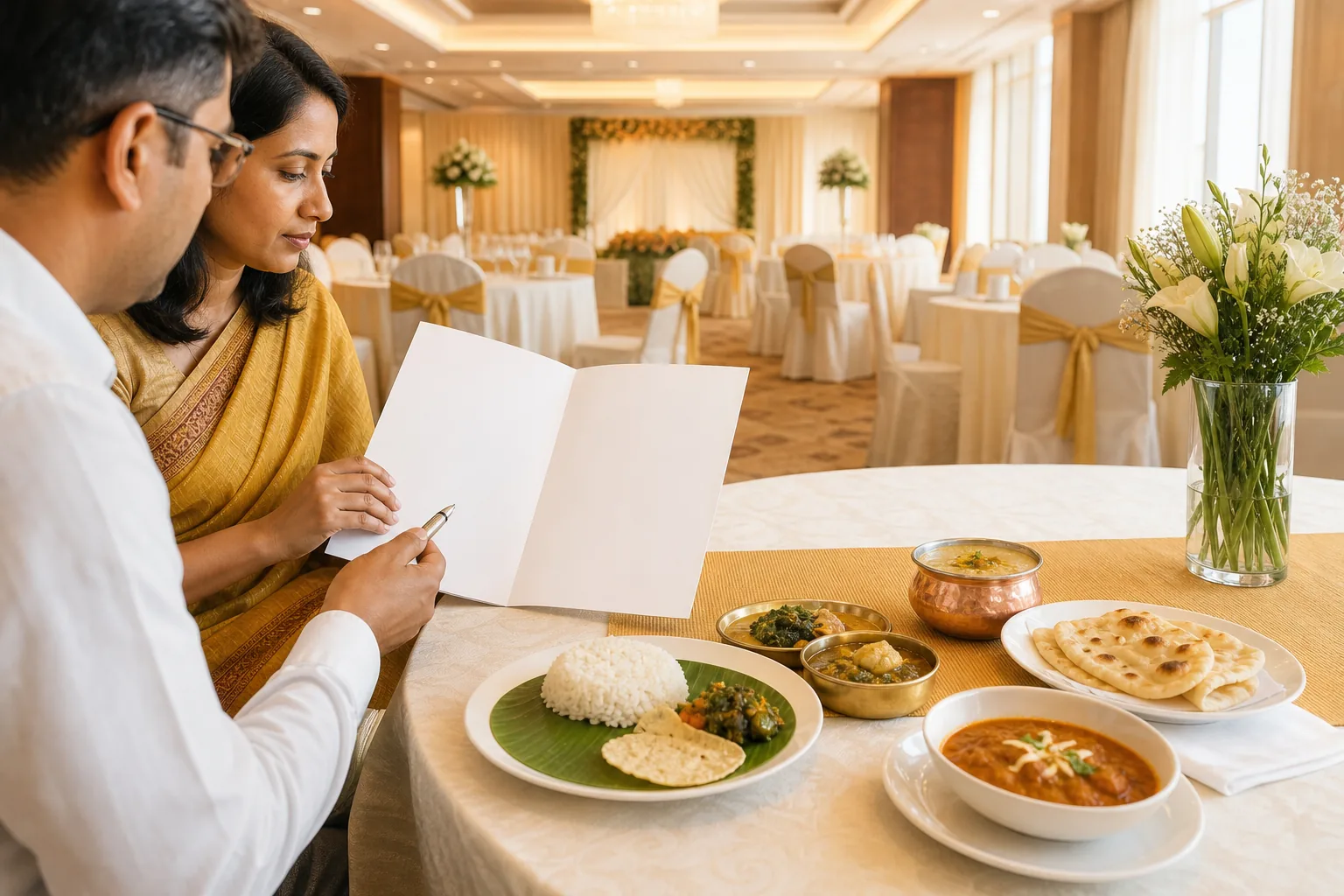
Say an organiser selects Silver for 100 guests. The food subtotal begins at Rs 65,000 to Rs 75,000. Don’t add a guessed tax amount to that figure and assume it is final. First ask whether the quote treats the food as standalone catering or as part of a wider venue service, then have the hotel confirm the GST rate and taxable base.
This is also where a price-per-plate comparison can mislead. One quote may show food only. Another may include service or a hall arrangement. Compare the same scope, then check the GST line separately. The wedding catering price details explain the package ranges and hall rental terms.
Hotel Shiny Grand provides an itemised event quote and GST invoices for banquet bookings. That gives an organiser a clear place to check the taxable value and charges before settling the bill. Ask the events team to confirm how tax applies to the specific menu and venue arrangement you have chosen.
Keep the approved quote with the final invoice. If guest numbers, menu choices, or hall terms change, ask for the estimate to be updated. That way, the figures you use for budgeting match the services delivered.
What event organisers should confirm before paying
GST can be a small line in a large event budget, but it affects the total due. Get the details in writing before you pay an advance. A quick check now is easier than sorting out a mismatch between the estimate and final bill later.
- Service classification: ask whether the quote covers standalone catering, a venue with food service, or a hotel composite package.
- Rate and taxable value: ask which GST rate applies and which line items it covers.
- Hall terms: confirm the rental amount and whether it is waived under the package you selected.
- Invoice details: check the supplier’s GST details, your billing name, and the service description.
- ITC: if a business plans to claim credit, have its finance or tax adviser check eligibility and supporting records.
Don’t treat 5% as the automatic “right” rate because it is lower. Nor should you assume 18% applies just because the event is in a hotel. The service classification and conditions decide the treatment.
Rates and rules can change through official notifications. Before a large booking, check the current CBIC material and ask your accountant or tax adviser to review any unusual package. For ready-to-eat goods, alcohol, or a separate hall charge, request a clear line-by-line explanation rather than applying a general catering rule.
Registration and return filing are the supplier’s compliance matters, but buyers can still ask for a proper tax invoice. The registration position may depend on facts beyond the event itself. If the supplier is unsure how to classify a bundled service, pause and get the answer confirmed before signing off on the estimate.
For a venue booking at Hotel Shiny Grand, settle the menu and layout first, then review the itemised quote and GST treatment before paying the advance. The advance is collected after those event details are finalised.
FAQ
Is GST on catering 5% or 18%?
It can be 5% or 18%, depending on how the service is classified. Standalone restaurant service may fall under 5% without ITC, while certain hotel or venue-related catering services may fall under 18% with ITC. Ask the supplier to state the classification and rate on the written estimate before you approve it.
Can a business claim ITC on catering GST?
A business may be able to claim ITC only when the purchase and buyer meet the relevant GST conditions. The rate alone does not decide eligibility. Ask the supplier for a tax invoice with a clear service description, then have your finance team or tax adviser confirm whether the credit can be claimed.
Does a banquet hall charge GST separately from food?
It depends on how the booking is structured and invoiced. A quote may show hall rental and catering as separate lines, or describe a combined service. Ask the venue to explain the taxable value and rate for each charge, and confirm whether any agreed hall-rental waiver changes the estimate.
Is GST included in Hotel Shiny Grand’s per-plate rates?
No. The catering prices are per plate, and applicable taxes are extra. The final tax treatment depends on the event arrangement and the rate confirmed for that booking. Ask for an itemised estimate showing the food subtotal, any hall rental, and the GST calculation before you make the advance payment.
Conclusion
Ask for the service classification, GST rate, and taxable value on the same written estimate before you confirm an event. For a banquet at Hotel Shiny Grand, review the menu and layout, then request an itemised quote through the banquet booking page. You can also WhatsApp +91 91815 56418.