Home › Blog › Guwahati to Shillong Distance, Time and Travel Tips
Guwahati to Shillong Distance, Time and Travel Tips
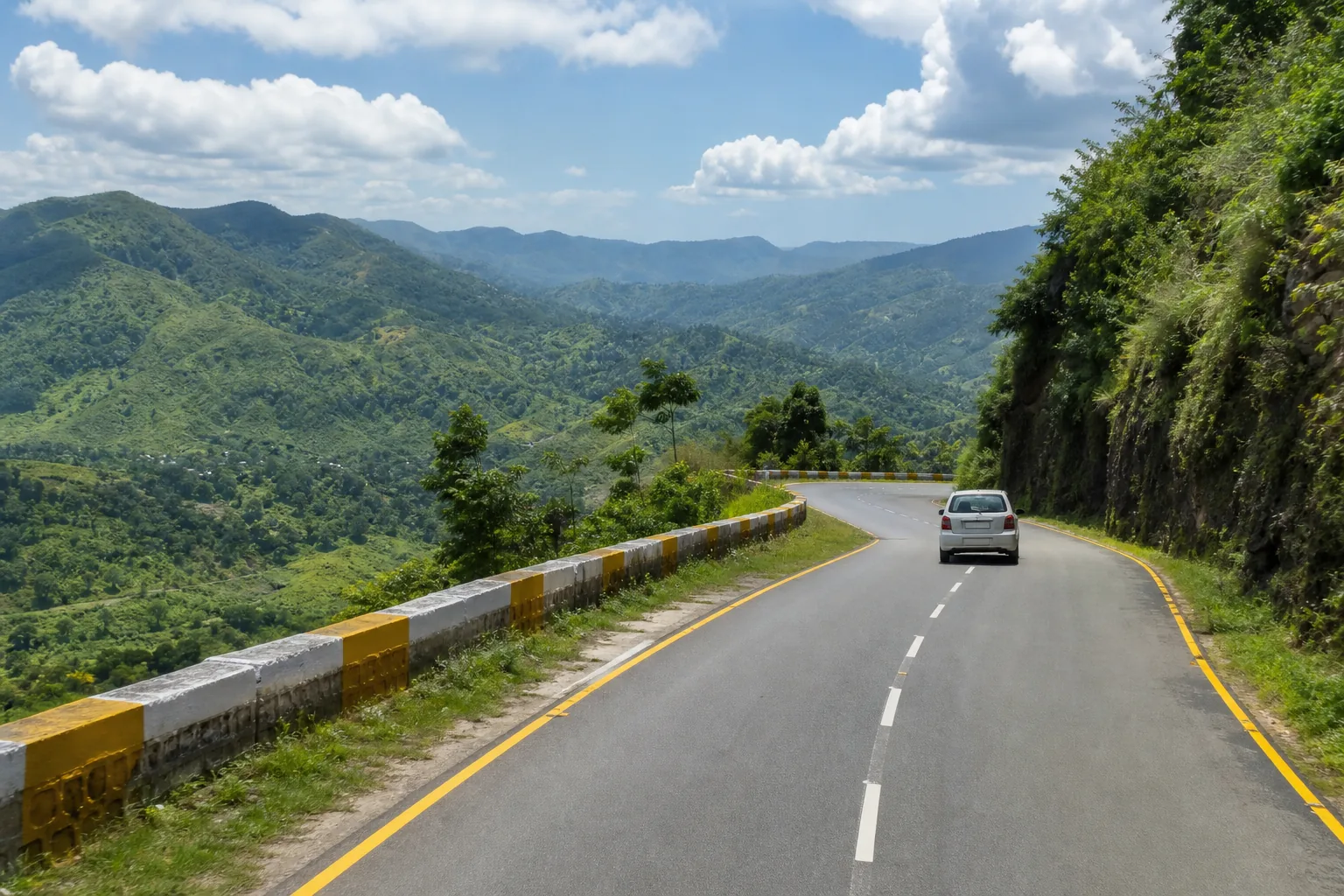
The Guwahati to Shillong distance is about 100 km by road: the East Khasi Hills district administration gives 104 km from Guwahati railway station. For most travellers, the road journey takes roughly 3 to 4 hours, but your mode of transport, departure point and road conditions can change the plan.
Here’s how the route works, what bus and taxi travel involve, and when to leave room for a stop or delay.
Guwahati to Shillong Distance and Main Route
The East Khasi Hills district administration puts Shillong 104 km from Guwahati railway station by road, and about 128 km from Guwahati Airport. The road distance depends on your start and end points, as well as the route you take.
A map’s straight line is shorter than the road, which bends and climbs into the hills. A sightseeing loop through Shillong, Mawlynnong, Dawki and Cherrapunjee is much longer again, and is a multi-stop circuit rather than a direct drive.
The main road corridor runs south from Guwahati towards Jorabat, then continues through Nongpoh and Umiam before reaching Shillong. Check your live map before leaving, as your chosen pickup point and current road diversions can affect the route.
Allow around 3 to 4 hours for the drive as a planning estimate, not a promise. Traffic on the Guwahati side, a food or tea stop, rain and road work can all add time. If you’re connecting to a flight, build in a buffer rather than planning around the shortest estimate.
For a wider view of onward routes from the airport, see the Guwahati Airport guide; it helps to plan your Guwahati stay and next leg as one itinerary. That’s especially useful if you arrive late or have an early start the next morning.
There are no rail lines in Meghalaya, according to the district administration, so the onward leg from Guwahati is by road or by helicopter. For most visitors, the road leg remains the key part to plan.
Bus, Shared Taxi or Private Taxi: What Changes?
The best fit depends on your group size, luggage and tolerance for waiting. A bus has a set boarding point and can suit travellers who don’t mind a longer journey. A shared taxi splits the vehicle cost across passengers, while a private taxi gives your group more control over pickup and stops.
| Travel mode | What to expect | Works well when | Check before setting out |
|---|---|---|---|
| Bus | Board at the operator’s stated stop. The journey may take longer than a direct car ride. | You’re travelling solo or want a shared public-transport option. | Departure time, boarding location, seat availability and luggage rules. |
| Shared taxi | You share a vehicle with other passengers. The vehicle may leave once seats are filled. | You can be flexible about departure and are travelling with manageable bags. | Fare per seat, pickup point, expected wait and drop-off point. |
| Private taxi | Your group has the vehicle for the journey, with more control over the pickup and stops. | You have several travellers, bulky luggage or a tight schedule. | Total fare, what it covers, pickup time and any planned stop. |
There isn’t one fare that applies to every bus or taxi. Rates can vary by operator, vehicle, date and pickup point. Ask for the full amount before you board or confirm a car, and check whether a quoted taxi price is per passenger or for the whole vehicle.
Journey times also vary by mode. A direct car trip is often planned at about 3 to 4 hours. A bus or shared taxi may take longer because of the service route, boarding process, passenger pickup or a stop on the way. Confirm the expected duration when you book, then keep extra time in hand.
If you’re travelling from Guwahati Airport, don’t assume a Shillong-bound bus or shared taxi leaves from the terminal. Confirm the exact pickup point first. Some travellers may need to reach a city boarding area before starting the hill journey, which adds another leg.
For a shared taxi, ask how the vehicle fills and where it drops passengers in Shillong. If you have large bags, check that there’s room before paying. For a private cab, agree on the route and any stop before departure so everyone has the same expectation.
A private vehicle makes it easier to pause at Umiam Lake, but a stop adds time. If reaching Shillong promptly matters more than sightseeing, keep the journey direct.
Fares, Booking and Journey-Time Planning
Plan the journey around the time you need to arrive, then choose a transport mode that fits. Don’t start with a fare alone. The low-cost option can require a trip to a different boarding point or a wait for the vehicle to fill, while a private taxi usually gives more control over the pickup.
Before booking, confirm these details in writing or at the counter:
- The exact pickup and drop-off points.
- The departure time and whether it is fixed.
- The fare, including whether it is per seat or for the vehicle.
- How much luggage you can take.
- What happens if your arrival is delayed.
For a bus, check the current timetable and ticket rules with the service provider. For a shared taxi, confirm the fare and ask whether the vehicle has a fixed departure or waits for more passengers. For a private taxi, agree on the vehicle, pickup location and total charge before the trip.
These checks matter most when your journey begins at the airport. A flight delay can make a fixed departure hard to catch. If your arrival time is uncertain, allow time to collect your bags and reach the boarding point. Don’t plan a close connection between landing and departure.
Keep the road journey separate from your flight buffer. A drive that usually takes a few hours can take longer when traffic builds or rain slows the hill section. If you’re flying out of Guwahati after visiting Shillong, consider returning to Guwahati the day before rather than aiming to arrive just before check-in.
The direct airport-to-Shillong route guide can help you think through the airport leg and whether travelling straight from arrivals suits your timing. Hotel Shiny Grand is near Guwahati Airport, so an overnight stay can also split a late arrival and an early onward journey into two manageable parts.
Keep a screenshot of your ticket or booking details. Save the pickup point offline if you expect patchy data on the road. Carry some water and a light snack, especially if you’re travelling with children or expect to wait for a shared vehicle.
Stops and Sightseeing Along the Way
The road trip can be a direct transfer or the first leg of a longer Meghalaya visit. If you have spare time, Umiam Lake is a well-known stop before Shillong. It sits near the route and works better as a planned break than an unplanned detour when you’re rushing to reach town.
For a direct journey, keep sightseeing brief. A photo stop still takes time to park, get out and rejoin the road. Tell your driver before setting off if you want to pause, and check how that affects the fare and arrival estimate.
Shillong can be your base for a separate outing to Cherrapunjee, also called Sohra. Mawlynnong and Dawki are further stops for a longer trip. They’re not all quick roadside breaks on the direct drive to Shillong. Adding them changes the journey into a sightseeing circuit and increases the total distance substantially.

If your trip includes several places, plan the route by overnight base rather than trying to cover every attraction on the transfer day. For example, you might reach Shillong first, then set aside another day for a southbound outing. That leaves room for a proper visit instead of spending the day watching the clock.
Pack a light layer for the stop. The weather can feel different in the hills than it did in Guwahati, and rain can arrive while you’re out of the vehicle. Keep valuables with you when you leave the car, and agree on a clear meeting point before walking away.
Food and rest breaks are easiest when you plan them with the driver or check what’s open along your route on the day. Don’t rely on an assumed stop or opening time. A short pause for tea may be enough for a direct transfer; a meal break needs more time in the schedule.
Before setting out on a multi-day loop, decide which places deserve a full stop and which are optional. If the weather worsens or the first leg takes longer than expected, drop an optional stop rather than pushing the whole day late.
Best Season, Weather and Road Conditions
Choose your travel day with the weather in mind. The cooler, drier months are often more comfortable for road travel, while the monsoon brings heavier rain and can make timing less predictable. Conditions can change during the day, so check the forecast close to departure.
Check the weather report before travelling, especially during rainy periods. A forecast cannot tell you exactly how long a particular road section will take, but it helps you decide whether to leave more time.
Rain can reduce visibility and slow traffic. Give yourself a wider arrival window if you’re travelling in wet weather. If your plan includes a scenic stop, be ready to skip it when rain makes the pause uncomfortable or the drive behind schedule.
Ask about current road conditions on the day. Your driver or transport operator may know of local delays, road work or a diversion. Use a live map as another check, but don’t treat its arrival estimate as a fixed promise on a hill route.
For a night journey, confirm the departure and arrival arrangements before you set off. Keep your phone charged and share your plan with someone travelling with you or meeting you. If you’re uncomfortable driving in poor visibility, choose a daytime departure where your schedule allows.
Peak travel dates can also make seats and vehicles harder to arrange at short notice. Book ahead when you have a fixed arrival time, then reconfirm the pickup details before travel. In quieter periods, still verify the timetable rather than assuming the same service runs every day.
Carry a rain layer in any season. It takes little space, and it’s useful if you need to leave the vehicle during a shower. Keep important documents in a dry pouch and place spare clothes where you can reach them without unpacking everything.
Plan Your Departure from Guwahati
Start by working out where your journey begins: the airport, railway station or another point in Guwahati. Then match that location to the transport’s actual pickup point. This simple check can prevent a last-minute cross-city transfer before the Shillong trip even starts.
If you arrive at the airport late, think about whether to travel onward straight away or rest first. A direct car can save a separate trip into the city, while a bus or shared taxi may require reaching its boarding point. Check the full plan, not only the time spent on the highway.
Hotel Shiny Grand is in Borjhar, near Guwahati Airport. Direct room bookings include one complimentary one-way airport transfer (pickup or drop), and guests can share flight details while booking. That may help with the airport part of your plan, but it is separate from transport to Shillong.
Keep some slack between your road arrival and any onward flight or train. Check the instructions that apply to your own itinerary, and don’t depend on a tight road-to-flight connection.
Before leaving, check your booking confirmation, charge your phone and save the pickup details. If you’re travelling with children or several bags, tell the transport provider in advance. Leave early enough for a food stop or an unexpected delay, rather than counting on an uninterrupted drive.
For an early departure from Guwahati, an airport-area overnight stay can reduce the pressure of arriving from Shillong on the same day as your flight. Hotel Shiny Grand has a 24/7 front desk; check your room and transfer arrangements directly before travelling.
Frequently Asked Questions
How far is Guwahati from Shillong by road?
The East Khasi Hills district administration gives 104 km by road from Guwahati railway station, and about 128 km from Guwahati Airport. The exact road distance depends on your pickup point, destination and route. A multi-stop sightseeing circuit through places such as Mawlynnong and Dawki is much longer than the direct transfer.
How long does it take to travel from Guwahati to Shillong?
Allow roughly 3 to 4 hours for a direct road journey, then add time for traffic, weather or a stop. A bus or shared taxi may take longer because of its boarding process or route. Treat any quoted duration as an estimate, especially during heavy rain or busy travel periods.
Which is better for the journey, a bus or a taxi?
A bus can suit you if you’re happy to use its stated boarding point and timetable. A shared taxi can work when you’re flexible about waiting and have manageable luggage. A private taxi gives your group more control over pickup and stops. Check the fare, luggage space and drop-off point before choosing.
Can I travel directly from Guwahati Airport to Shillong?
Yes, a direct road trip from the airport is possible by private vehicle, but confirm the pickup and fare with the transport provider. Bus and shared-taxi boarding points may be elsewhere in Guwahati, so check whether you need another ride first. If your flight is delayed, contact the provider rather than relying on a tight connection.
Is there a train from Guwahati to Shillong?
Plan to reach Shillong by road from Guwahati rather than expecting a direct passenger train for this leg. There are no rail lines in Meghalaya; the nearest railway station is Guwahati. If you arrive by train in Guwahati, arrange your onward road transport and confirm where it departs.
Conclusion
For a direct trip, plan on roughly 100 km by road and allow 3 to 4 hours, with extra time for rain, traffic or a stop. Confirm the pickup point and current fare before you travel. If your journey starts or ends at Guwahati Airport, check Hotel Shiny Grand’s direct booking details and plan your airport stay around your onward trip. You can also WhatsApp +91 91815 56418.