Home › Blog › How Indians Book Hotels: Statistics and Trends
How Indians Book Hotels: Statistics and Trends

Statistics on how Indians book hotels can show demand trends, but they don’t tell every traveller’s story. The useful signals are booking channels, trip purpose, room rates and busy travel periods. Here’s how to read those signals, and what Hotel Shiny Grand’s own room rates can tell a traveller planning a stay in Guwahati.
India’s hotel market: growth, scale and recovery
India’s hotel market is often discussed through market size, expected revenue and booking growth. These figures describe different things. A market estimate may cover hotel room revenue, while a booking report may count reservations or searches. Treat those measures as related, not interchangeable.
For a traveller, the useful takeaway is that booking demand can change by place and date. A national growth estimate won’t tell you whether a room is available near your arrival airport on a particular night. Nor does a sector forecast set the rate for one hotel.
That distinction matters when reading claims about a recovery or a surge. Check what the figure measures, which dates it covers and whether it describes India-wide hotel revenue or a narrower set of bookings. A forecast is an estimate, not a count of completed stays.
Hotel Shiny Grand has 35 rooms near Guwahati Airport. Its room rates give a local example, not a national average: direct bookings start at ₹2,500 per night, with taxes extra. The property also has a banquet hall that seats up to 100 guests, so its business includes events as well as overnight stays.
How travellers find and book hotels
Hotel searches often begin on a phone, but the booking may happen through an app, a travel site or the hotel’s own website. The channel affects what you need to check: the final price, included services, cancellation terms and who handles a change.
For a short airport stay, compare the full booking terms rather than only the room rate. A direct rate may include breakfast or an airport transfer, while another rate may have different conditions. At Hotel Shiny Grand, direct bookings include breakfast, Wi-Fi, parking and one complimentary one-way airport transfer (pickup or drop). Share flight details when arranging the transfer.
Paying at the property can also affect how a reservation works. Before you book, confirm when payment is due and how the hotel will confirm the room. Hotel Shiny Grand doesn’t require advance payment to enquire or request a room; confirmation comes by message or phone. Check the booking details before you reserve.
Booking lead time varies with the trip. Someone with fixed flight dates may reserve as soon as plans are set. A flexible weekend traveller may wait. Don’t assume that every Indian traveller books the same number of days ahead. For a group or a festival date, confirm the room type and cancellation deadline early.
Who books hotels in India, and why
There isn’t one typical hotel guest. A business traveller may need a work desk and a GST invoice. A family may care more about sleeping arrangements. A transit guest may mainly need a late check-in and a simple plan for an early departure.
These trip types help explain why national averages can hide useful details. Two guests may pay different amounts because they need different room sizes or services. A solo guest can choose a Single Executive Room at Hotel Shiny Grand for ₹2,500 per night, taxes extra. A family of three can book a Superior Triple Room for ₹5,000 per night, taxes extra.
Income and age can shape a person’s budget, but don’t infer a national profile from a hotel’s guest mix. For a sound comparison, look at the purpose of travel and the room setup. A couple booking a queen room has different needs from a work traveller who needs a desk and a GST invoice.
For airport stays, the arrival and departure times can matter as much as the room. Hotel Shiny Grand has a 24/7 front desk. Its check-in time is 12 noon and check-out is 11 am. Guests can ask about early check-in or late check-out, subject to availability. If your flight is very early, tell reception the previous evening and settle the bill in advance.
A useful way to read hotel booking trends is to ask what the guest is trying to solve. That makes traveller profiles more meaningful than a broad age bracket alone.
Hotel prices, spending and performance measures
There’s no single room rate that represents every Indian hotel booking. Location, date, room type and what the rate includes all affect the amount a guest pays. For a fair comparison, check the same number of guests and nights, then compare the final payable price.
Hotel Shiny Grand’s direct room rates offer a clear local reference. The Single Executive Room is ₹2,500 per night; the Deluxe Queen is ₹3,000; the Executive King is ₹3,500; and the Superior Triple is ₹5,000. Taxes are extra. These are the hotel’s own rates, not a measure of average spending across India.
Hotels also track occupancy and average daily rate, or ADR. Occupancy is the share of available rooms that are sold for a set period. ADR is room revenue divided by rooms sold. Read the measures together: high occupancy alone doesn’t show the price guests paid, while ADR alone doesn’t show how many rooms were filled. Revenue per available room combines room revenue with available capacity and offers another way to assess performance.
For travellers, the same thinking helps with a booking decision. A low nightly rate may not include breakfast or transport. A higher rate may include services you’d otherwise pay for separately. Check the full price and the usable value of each inclusion. Hotel Shiny Grand includes breakfast from 7:30 am to 10:00 am with direct bookings, which may suit a later departure better than a very early flight.
If cancellation terms affect your plans, read the deadline before you confirm. Hotel Shiny Grand allows free cancellation up to 24 hours before check-in on direct bookings. Compare cancellation terms before booking.
Seasonality, festivals and regional booking patterns
Hotel demand can rise around holidays and festivals, but the pattern differs by destination and date. Festive travel dates can affect room demand, but this does not mean every hotel or city will fill at the same time.
In Guwahati, travellers may plan around Bihu, Durga Puja, wedding dates or a trip onward through Assam and the North East. These events can bring different needs. A family visiting relatives may want several rooms, while a wedding guest may need a room close to the event venue. For an airport stop, arrival time may matter more than sightseeing plans.
When dates are fixed, book once your travel plans are firm and check the cancellation terms. If your plans can move, compare more than one date before confirming. Demand around a local event can differ from a regular week, so don’t treat one city’s pattern as a rule for all of India.
Weather can shape plans too. During the monsoon, leave room in your schedule for possible travel delays. Keep your flight details handy and confirm your hotel arrival time if it changes. Hotel Shiny Grand is near Guwahati Airport and can be a useful base for a flight-linked stay, but guests should confirm transfer arrangements when booking.
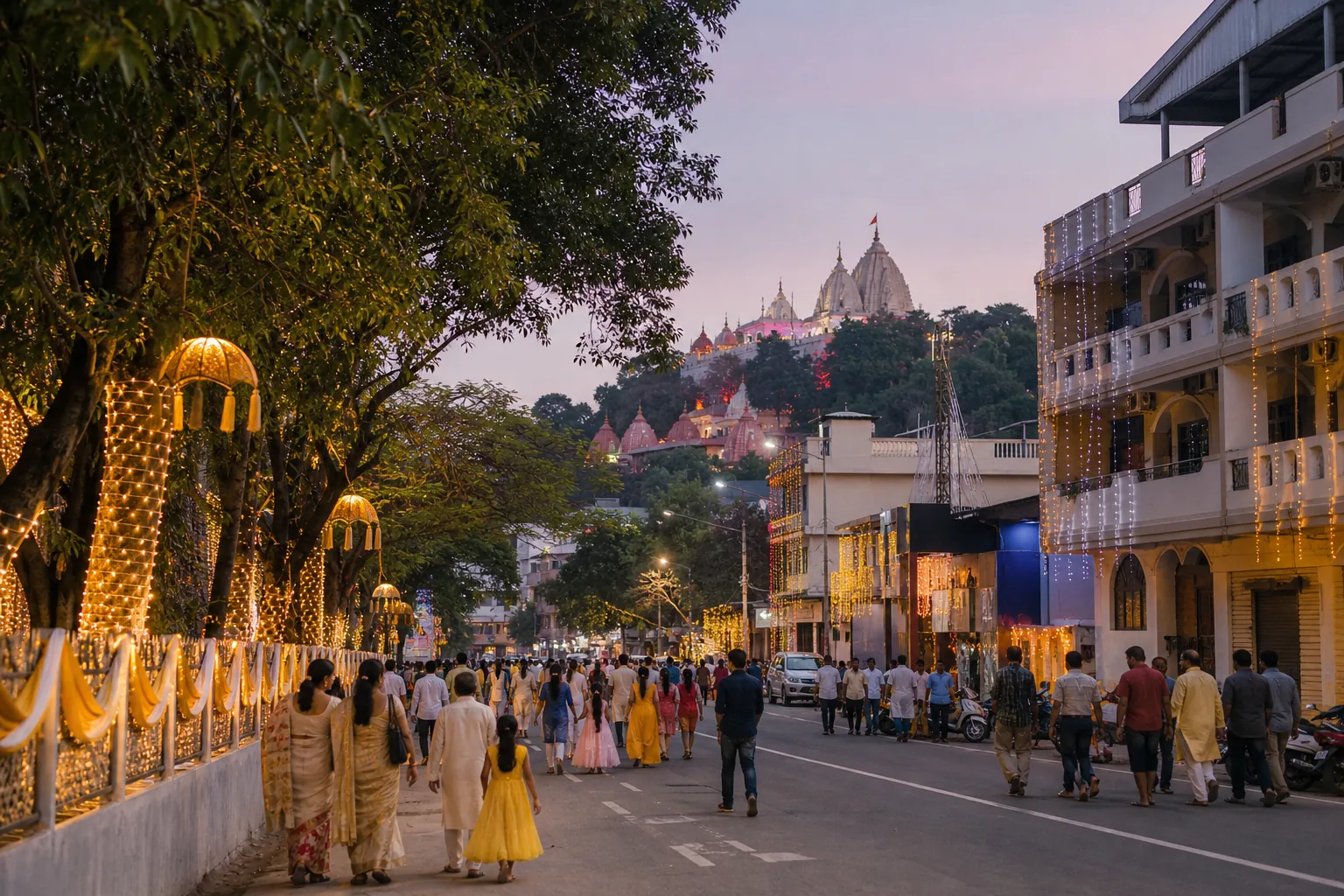
For a festive booking, the best plan is simple: confirm the dates, room occupancy and arrival details before travel day. A seasonal pattern can guide your timing, but it can’t replace checking the exact stay.
FAQ
How do Indians usually book hotel rooms?
Indians book hotel rooms through mobile apps, travel websites or directly with a hotel. The right route depends on what you need to confirm, such as the final price, included breakfast, payment timing or cancellation terms. Check the full booking conditions before paying. For an airport stay, also confirm how late arrivals and early departures are handled.
How far ahead should I book a hotel in India?
Book once your travel dates are firm, especially if you’re travelling for a festival, wedding or group event. There isn’t one lead time that fits every trip. A flexible traveller can compare dates, while someone with fixed flights should confirm a room and its terms earlier. Always check the cancellation deadline before you reserve.
What does hotel occupancy rate mean?
Hotel occupancy rate is the share of rooms available for sale that are occupied during a set period. It helps show how full a hotel is, but it doesn’t tell you the room price. Hotels read occupancy alongside ADR, which measures room revenue per room sold. For a guest, these are business measures, not a guarantee of availability.
Are hotel prices in India higher during festivals?
Demand can increase around festivals and holidays, but the effect depends on the destination and dates. Check the rate for your specific stay, compare the full inclusions and review cancellation terms rather than assuming every property follows the same pattern.
What is included in a direct booking at Hotel Shiny Grand?
Direct bookings at Hotel Shiny Grand include breakfast, Wi-Fi, parking and one complimentary one-way airport transfer (pickup or drop). Breakfast is served from 7:30 am to 10:00 am, and guests should share flight details when arranging the transfer. Room rates start at ₹2,500 per night, with taxes extra. Confirm the room type and dates before you travel.
Conclusion
Use national booking trends as context, then choose based on your dates, room needs and the full rate. If you’re staying near Guwahati Airport, check Hotel Shiny Grand’s direct booking details and confirm your arrival plan on its hotel booking page.
For official context, see the Ministry of Tourism, Government of India and the India Brand Equity Foundation. Figures change, so confirm current numbers at the source.