Home › Blog › India Catering Market Statistics: Size and Trends
India Catering Market Statistics: Size and Trends
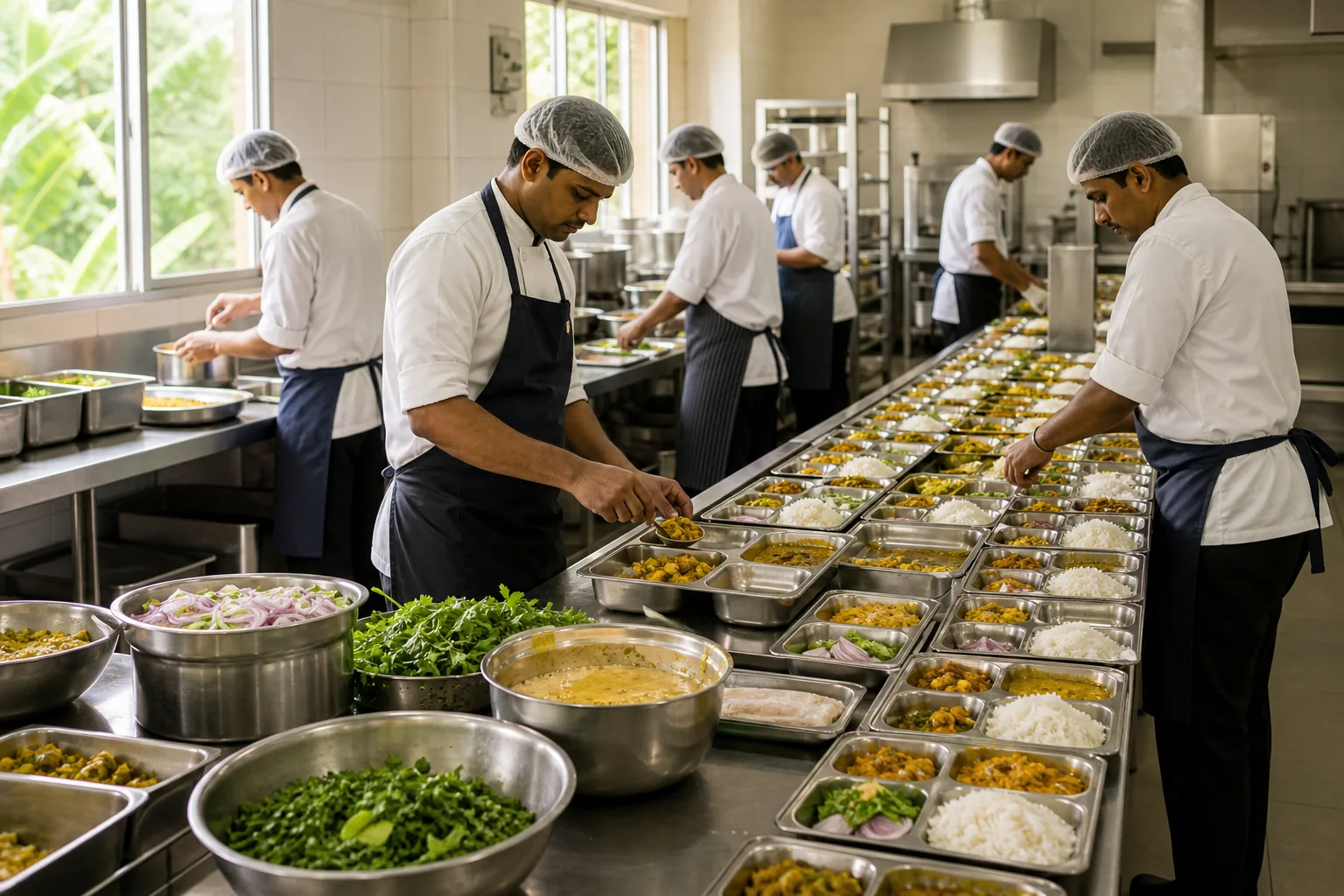
India catering market statistics can point to very different totals because reports don’t always count the same kinds of food service. One market analysis offers an estimate of India’s catering industry for 2025, but that estimate needs context before you use it to plan an event or assess local demand.
Here’s how to read the estimates, understand the main segments and apply national trends to Assam and Guwahati.
India Catering Market Size: What the Estimates Measure
A market-size estimate is useful only when you know what it counts. Some reports focus on event catering. Others include recurring meals at workplaces, schools, hospitals and factories. Some combine catering with delivery-only kitchens or wider food-service sales. Those figures answer different questions, so they shouldn’t be treated as interchangeable.
A 2025 regional analysis by Ken Research estimated India’s catering industry and projected further growth by 2030. These are market-analysis estimates, not an official government count. The report links demand to weddings, corporate cafeteria outsourcing and institutional contracts. Read the India catering market estimate and regional analysis with its scope in mind.
Other estimates may use a broader food-service category. That can bring in restaurants and delivery sales that aren’t traditional catering. A separate catering-services analysis describes recurring meal contracts alongside event packages and venue partnerships. Its category is broader than wedding food alone, but it still isn’t the same as all food service.
Before using any headline figure, check four things: the report’s definition, its base year, whether it measures revenue or meal volume, and which services it includes. If one estimate covers institutional meals while another counts only event bookings, a gap between them doesn’t prove that one is wrong.
What Official Indian Data Can and Cannot Tell You
Official statistics can help describe the conditions around catering demand, but they may not provide one ready-made figure for the whole market. A public dataset might track a specific activity, location or business type. A commercial report may then combine several such activities under its own market definition.
For a local view, start by writing down the question. Are you estimating wedding food spend, regular meals for a workplace, or food service across the whole region? Then match the evidence to that question. A city-level estimate based on event bookings won’t tell you how many meals factories serve each day.
Keep the input measures separate. Population and urban growth can help describe the potential customer base. Workplace activity may help frame corporate meal demand. Event counts can give context for occasion-led catering. These are indicators, not direct measures of catering revenue. Don’t add them together and label the sum a market total.
It also helps to record the source, date, geography and definition beside every number. If you update a forecast later, you’ll know whether the change came from new data or from a different scope. That small habit can prevent a national headline from being mistaken for a Guwahati estimate.
Market Segments: Events, Institutional and Other Catering
India’s catering market includes several models with different buying patterns. Weddings and social events bring short, date-based orders. Institutional and contract catering is built around repeat meal service for groups such as staff or students. Delivery-led kitchens serve orders through digital channels, while some operators also support corporate events and boxed meals.
That mix affects how you interpret growth. A busy wedding season may lift event demand without changing long-term workplace meal contracts. A large institutional contract can create steady volume, but it won’t necessarily reflect demand for a one-day reception. For planners, the useful question is which segment matches the service being priced.
A Ken Research analysis of catering and chef-led kitchen and restaurants describes institutional contracts as a recurring source of meal volume. It also notes the role of delivery-only kitchens in serving digital orders. Its catering and cloud-kitchen market analysis is useful for seeing why those models belong in separate parts of the picture.
Digital ordering is a trend in catering. A delivery kitchen may depend on order platforms for reach. A banquet caterer may use online menus or enquiry forms to manage event leads. The shared point is that digital channels can shape how customers discover food services, while the underlying service and costs remain different.
Hotel Shiny Grand’s banquet catering is aimed at events, and it is available for any guest count, tailored to your requirements. For a wedding organiser, the guest count and event date are more useful starting points than a broad national growth rate. The Guwahati wedding catering cost guide can help frame per-plate budgeting.
When you plan a reception, check what the per-plate package covers and whether hall rental applies. Hotel Shiny Grand’s Silver catering is ₹650 to ₹750 per plate, Gold is ₹850 to ₹950, and Platinum is ₹1,100 to ₹1,250. Hall rental starts at ₹25,000 and is waived for 60 or more guests. Applicable taxes are extra.
Demand Drivers and Trends to Check in the Data
Digital ordering is one demand driver highlighted across the market research. It can help customers find food services and place orders, especially for delivery-led kitchens. But the platform itself doesn’t guarantee a profitable order. Operators still need enough demand in a service area and a menu that works for the order type.
Outsourcing is another trend to watch. When a workplace or institution hires a specialist for meal service, it shifts day-to-day food operations to a contracted provider. For the buyer, a repeat contract can make meal planning more consistent. For the caterer, it can support steadier demand than a calendar built only around weddings and social events.
Event spending follows a different pattern. Weddings and other gatherings can raise demand during busy periods, while the timing and size of events may vary. A regional analysis links wedding spending and corporate cafeteria outsourcing with catering growth, and forecasts further expansion. Treat those projections as a reported outlook, not a promise for every city or service type.
When comparing trend claims, ask what evidence sits behind them. Does the figure track bookings, meals, revenue or the number of contracts? Does it cover all India or only a region? Does it separate digital delivery from event catering? These questions help keep a trend useful rather than turning it into a claim that every operator will grow at the same rate.
For a caterer or venue, the practical test is local: note enquiry volume, confirmed guest counts and repeat business by segment. A rise in digital orders may matter to a delivery kitchen. For a banquet venue, changes in event bookings and guest numbers are more direct signals.
Applying National Catering Data to Assam and Guwahati
National estimates can give Guwahati context, but they can’t set a local event budget by themselves. A market report may group cities with very different demand patterns. For a family planning a wedding or a company arranging a meeting, guest count, menu scope and venue needs have a more direct effect on the quote.
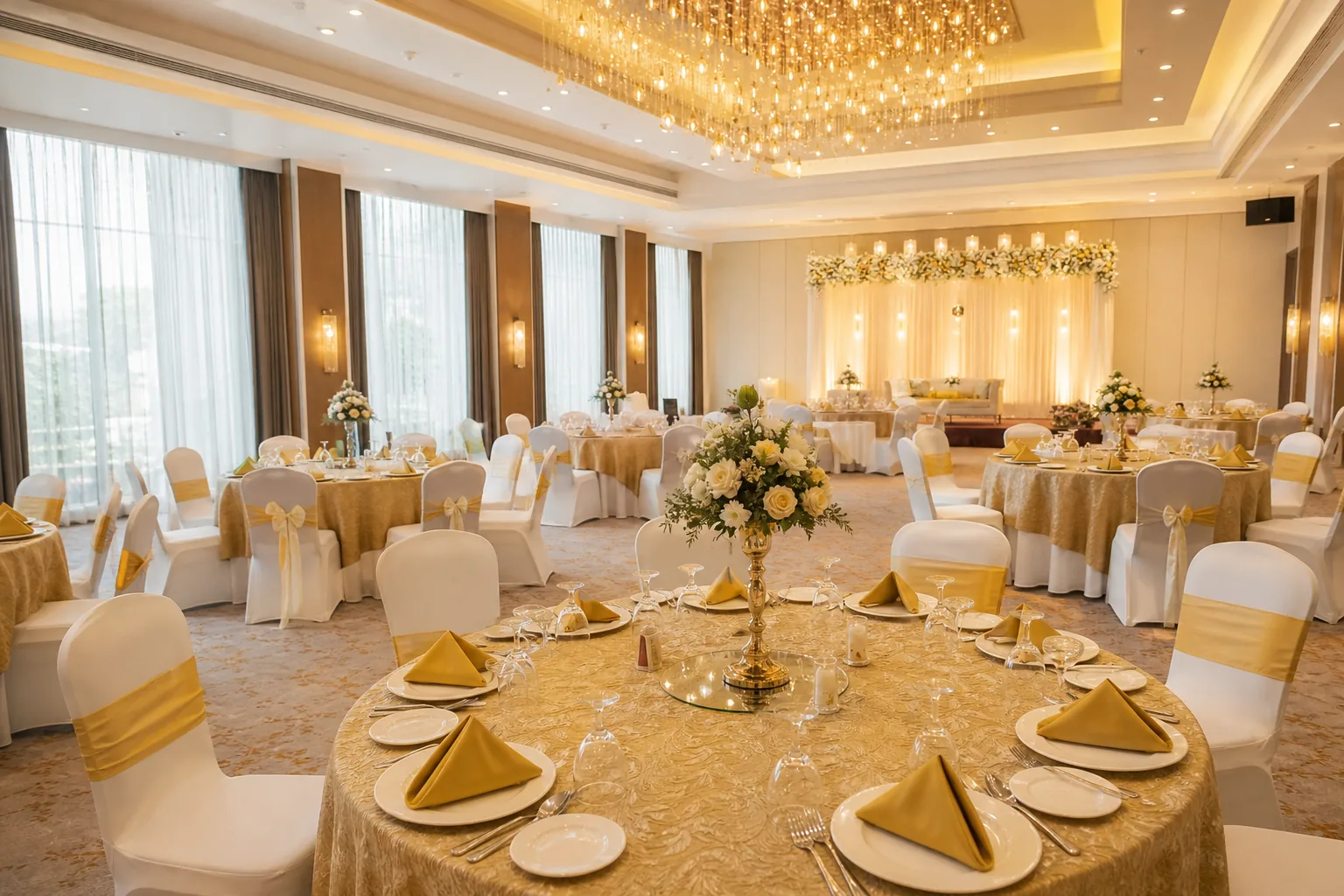
Hotel Shiny Grand has a 100-guest banquet hall in Borjhar, Guwahati. Its stated seating capacity is 100 in theatre style, 70 for round-table dining, 60 in classroom layout or 30 in U-shape. Those layouts change how many people the room can hold, so match the setup to the event before comparing the food total.
For 100 guests, the estimated food cost is ₹65,000 to ₹75,000 for Silver, ₹85,000 to ₹95,000 for Gold, or ₹1,10,000 to ₹1,25,000 for Platinum. Hall rental may apply unless the package qualifies for a waiver, and applicable taxes are extra. These are Hotel Shiny Grand’s own event rates, not a national average.
The in-house chef-led kitchen and restaurant has more than 120 signature dishes across Indian, Assamese, North Indian, Chinese and Tandoori food. That matters when an organiser wants to discuss a tailored menu with the venue. Hotel Shiny Grand generally does not permit outside catering, so confirm the menu and layout before you finalise the event details.
Corporate planners should assess the service by the meeting format and requirements. Hotel Shiny Grand’s hall has projector and screen, sound system, microphone, whiteboard and Wi-Fi. Half-day corporate meeting packages start from ₹15,000, with a working lunch, tea and coffee, and GST invoicing. Confirm the final package and layout as part of the event enquiry.
For a wedding, use national data as background, then ask for a local quote based on the date, guest count and chosen menu tier. The wedding reception catering details can help you think through the venue and food questions before you enquire.
FAQ
What is the estimated size of India’s catering market?
A 2025 market analysis estimated the size of India’s catering industry but did not provide a figure here. It projected growth by 2030, but that remains a forecast, not a final result. Check the report’s definition before comparing it with figures for food service or delivery, since those categories can include activity outside traditional catering.
Why do reports give different catering market figures?
Reports can count different services, years and types of sales. One may include institutional meal contracts and events, while another may add cloud kitchens or broader restaurant activity. Check the geographic scope and whether the figure measures revenue, meals or bookings. A difference in definition can explain different totals without either figure being directly comparable.
Which catering segment has recurring demand?
Institutional and contract catering can provide recurring demand through ongoing meal-service agreements. Event catering is usually tied to specific dates and guest counts, so its demand can vary across the year. Digital delivery kitchens follow a different pattern again, as their order volume depends on customer demand and the channels used to reach them.
How should I use national catering data for a Guwahati event?
Use national data for context, then plan with local details. Start with your guest count, seating layout and menu tier. At Hotel Shiny Grand, catering is available for any guest count, tailored to your requirements, and the hall’s capacity depends on the layout. Request an itemised quote so food costs, hall rental and applicable taxes are clear.
Conclusion
Use market estimates to understand broad direction, not to set a Guwahati event budget. For a local catering quote, decide your guest count and seating layout, then review the menu and package with Hotel Shiny Grand. Send an enquiry through the banquet and wedding venue page to discuss your event.
For official context, see the Ministry of Tourism, Government of India and the India Brand Equity Foundation. Figures change, so confirm current numbers at the source.