Home › Blog › India Hotel Industry Statistics: Market and Trends
India Hotel Industry Statistics: Market and Trends

India's hotel story has a measurement problem: tourism's economic footprint is easier to quantify than the hotel market itself. India hotel industry statistics make more sense when you separate hotel-room data from wider travel and tourism figures.
We analyzed 55 comments and questions from Reddit, YouTube and Quora about India hotel industry statistics and found that 22% mentioned the low profitability of luxury hotels.
Here are the figures available, what they can tell you, and how national demand trends relate to airport and event stays in Guwahati.
India Hotel Market Size and What Estimates Include
Hotel revenue in India cannot be captured by a single number. A hotel-market estimate may count room sales alone, while a tourism figure can include transport, food, attractions and other visitor spending. Those measures answer different questions.
Travel and tourism figures are broad economic measures, not hotel booking revenue. They should not be presented as a hotel-market forecast.
Room inventory is another measure. In 2025, the mid-scale category had 315,000 keys, 56.0% occupancy and an average daily rate of USD 53. These figures describe one category, not every hotel in the country. They cannot be added to tourism GDP or treated as a total for luxury, upscale and independent properties.
For anyone reading a market report, check the unit before using a headline number. Revenue, GDP contribution, room supply and investment are not interchangeable. A large tourism figure can show the sector's role in the economy, but it does not tell a hotel owner how many rooms are occupied.
Keep tourism's GDP contribution separate from hotel-specific operating measures when citing figures in a business plan or presentation.
That distinction matters especially when headlines focus on luxury openings. The hard segment figures available here relate to midscale rooms, so they do not describe the whole market's mix or its performance.
Hotel Room Supply, Occupancy and Operating Performance
Room supply and occupancy tell different parts of the operating story. Supply counts the rooms a segment has. Occupancy shows the share of those rooms sold over a stated period. A supply figure without a matching demand measure can make a segment look larger without explaining how its rooms perform.
In 2025, the mid-scale segment had 315,000 rooms and 56.0% occupancy. Treat both as segment-level measures. They are not a national occupancy average, and they do not show performance in a particular city or hotel.
Average daily rate, or ADR, is the average room revenue per sold room before other revenue streams. Revenue per available room, or RevPAR, combines room rate and occupancy by spreading room revenue across all available rooms. Neither measure should be guessed from occupancy alone. A hotel with a higher occupancy rate may still earn less per available room if its average rate is lower.
| Measure | Reported figure or scope | How to use it |
|---|---|---|
| Midscale room supply | 315,000 rooms in 2025 | Use as a segment figure, not a count of all Indian hotel rooms. |
| Midscale occupancy | 56.0% in 2025 | Read alongside the period and segment definition in the source. |
| Premium occupancy outlook | An outlook for premium hotels | Use as a forecast for premium hotels, not a result for every hotel class. |
| Hotel-level operating review | Occupancy, ADR and RevPAR | Track together to see both room use and room income. |
ICRA's premium occupancy forecast points to a different picture from the midscale segment figure. It is an outlook, not a verified result for every property or destination. Keep forecasts separate from actual operating data.
For a hotel manager, the useful comparison is local and time-bound. Compare the same room type over the same period, then check whether changes in occupancy came with a change in room rate. That gives a clearer view than treating one national figure as a target.
Tourism Demand, Investment and Workforce Signals
Travel demand can lift hotel stays, but the national picture comes from several travel types. Domestic leisure trips, business travel and meetings all create different booking patterns. A hotel near an airport may see short stays tied to flight schedules, while an event venue may depend on local gatherings and visiting guests.
Airport traffic and hospitality revenue forecasts can offer a broad view of the sector. They do not predict the result for an individual hotel. Local demand, the type of guest and the timing of a stay can all matter when assessing a property's prospects.
Investment offers another signal, but it should not be confused with room demand. Hotel investment activity captures transaction activity, not the amount spent by travellers or the income earned from rooms. For operators, it is one part of the wider market picture rather than a direct measure of bookings.
New room supply can also shape competition across destinations. For local operators, this makes destination-level demand and the type of guest especially important. A property's location, services and fit for different travel needs can influence how it responds to changes in supply.
Demand drivers include higher disposable incomes and a wider choice of trips. Domestic tourism can contribute to tourism spending, alongside leisure, business travel and meetings. That does not mean each segment grows at the same pace. A conference calendar, a family holiday period and an early-flight stay each create different room needs.
The workforce is part of that capacity. Travel and tourism supports a broad range of roles, not only hotel jobs. For an operator, staffing plans still need to match actual service hours, room turnover and event schedules.
Figures from different reports and periods are not directly comparable, so check the source and year when reviewing market data. For a closer look at the premium occupancy outlook, ICRA's hospitality research summary is a relevant source.
What National Trends Mean for Airport and Event Hotels in Guwahati
National figures become useful when translated into the needs of a particular guest. Hotel Shiny Grand is an independent hotel in Borjhar, Guwahati, with 35 rooms and a banquet hall for events of up to 100 guests. Its two main uses are airport stays and small-to-mid-sized functions, each with a different demand pattern.
For an airport traveller, the room is often part of a tight journey plan. A late arrival needs a staffed front desk, while a dawn departure calls for clear check-out arrangements. Hotel Shiny Grand has a 24/7 front desk. Direct bookings include one complimentary one-way airport transfer (pickup or drop), and guests should share their flight details when booking.
Room choice can also shape the stay budget. Direct-booking rates are ₹2,500 for a Single Executive Room, ₹3,000 for a Deluxe Queen Room, ₹3,500 for an Executive King Room and ₹5,000 for a Superior Triple Room, with taxes extra. Direct bookings include breakfast served from 7:30 to 10:00 AM. A guest leaving before breakfast hours should plan around that serving time.
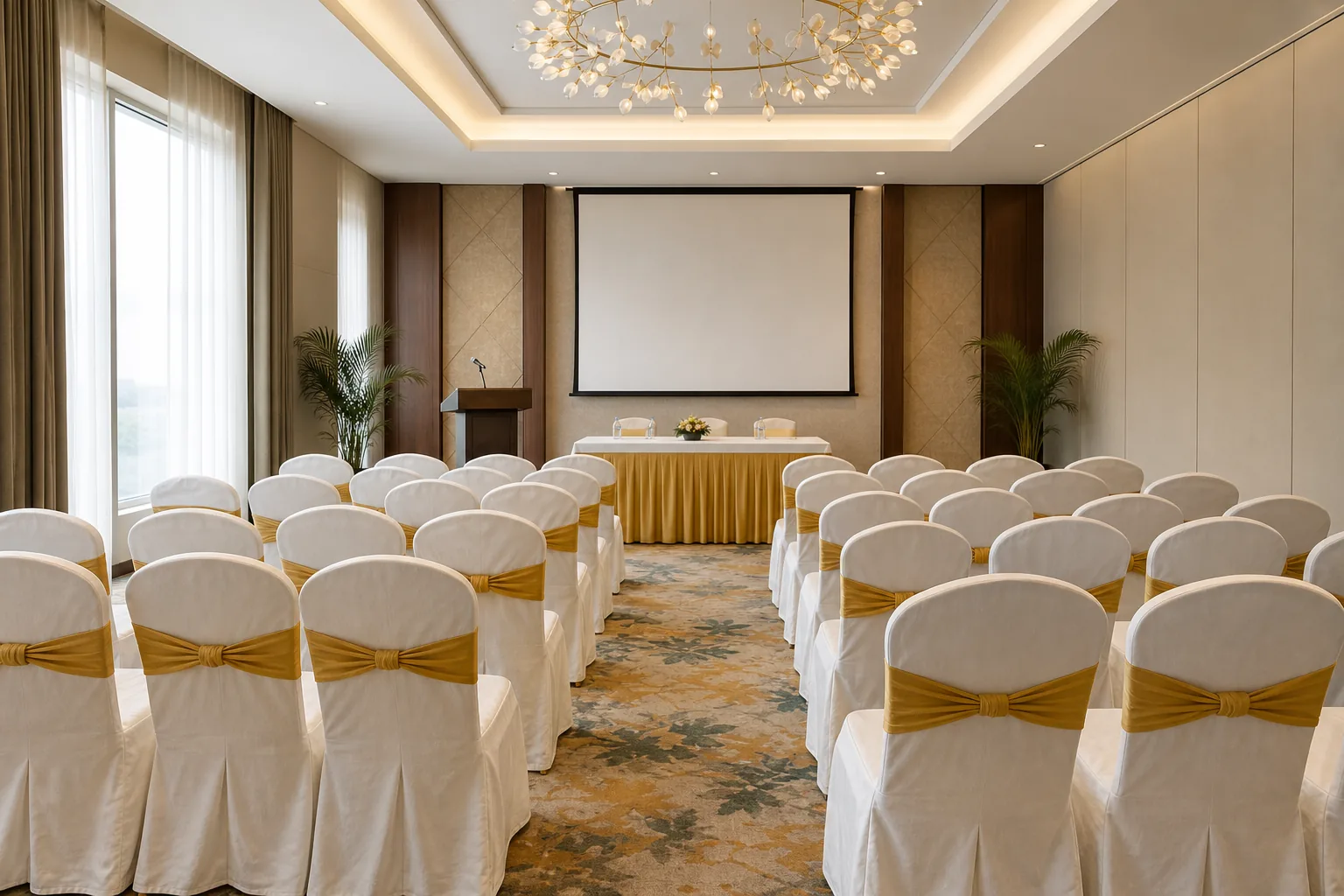
Businesses planning a meeting or event need a different set of checks. Hotel Shiny Grand's hall seats up to 100 in theatre style, 70 for round-table dining, 60 in classroom layout or 30 in a U-shape. Catering is available for any guest count, tailored to your requirements. Hall rental starts from ₹25,000 and is waived for 60 or more guests.
Those figures help event organisers test fit before they enquire. A 100-person theatre session and a 100-person seated meal use the room differently, so confirm the layout as well as the guest count. Catering is priced per plate: Silver is ₹650 to ₹750, Gold is ₹850 to ₹950, and Platinum is ₹1,100 to ₹1,250. Applicable taxes and any hall rental should be included in the event budget.
For corporate meetings, half-day packages start from ₹15,000 and are negotiable. The venue includes a projector and screen, sound system, microphone, whiteboard and Wi-Fi. A GST invoice is available. Teams planning a work event can use the Guwahati corporate event venue guide to think through room layout and delegate needs.
These services fit a clear local use case: a visiting team can stay near the airport, while a meeting or family event can take place in the same property. The right question is not whether a national occupancy forecast matches a single hotel. It is whether the room mix, event capacity and booking terms match the guests you expect.
Frequently Asked Questions
What is the size of India's hotel industry?
There is no single figure here that represents total hotel revenue across India. Tourism's GDP contribution is a broader measure that includes activity beyond hotel rooms. For hotel-market analysis, keep revenue, room supply, occupancy and investment separate, and check the segment and period attached to each figure.
What is the occupancy rate for hotels in India?
There is no one occupancy rate that applies to every Indian hotel. Available 2025 mid-scale figures list occupancy at 56.0%. Compare like with like by checking the segment, location and time period.
How many hotel rooms are there in India's midscale segment?
Available 2025 mid-scale figures list 315,000 keys. That is a segment estimate, not the room count for all Indian hotels. It should be read with the definition of mid-scale and the period it covers, rather than used as a total supply figure.
What should I check when choosing a hotel near Guwahati Airport?
Check how the front desk handles late arrivals, what time breakfast is served, and how early departures work. Confirm the room rate and what comes with a direct booking. At Hotel Shiny Grand, the front desk is staffed around the clock, and direct bookings include breakfast and one complimentary one-way airport transfer (pickup or drop).
Conclusion
Use national hotel figures as context, not as a forecast for one property. For an airport stay or a meeting in Borjhar, match the room or hall setup to your arrival time and guest count, then check direct booking options at Hotel Shiny Grand.
For official context, see the Ministry of Tourism, Government of India and the India Brand Equity Foundation. Figures change, so confirm current numbers at the source.