Home › Blog › MICE and Corporate Events in India: Key Statistics
MICE and Corporate Events in India: Key Statistics
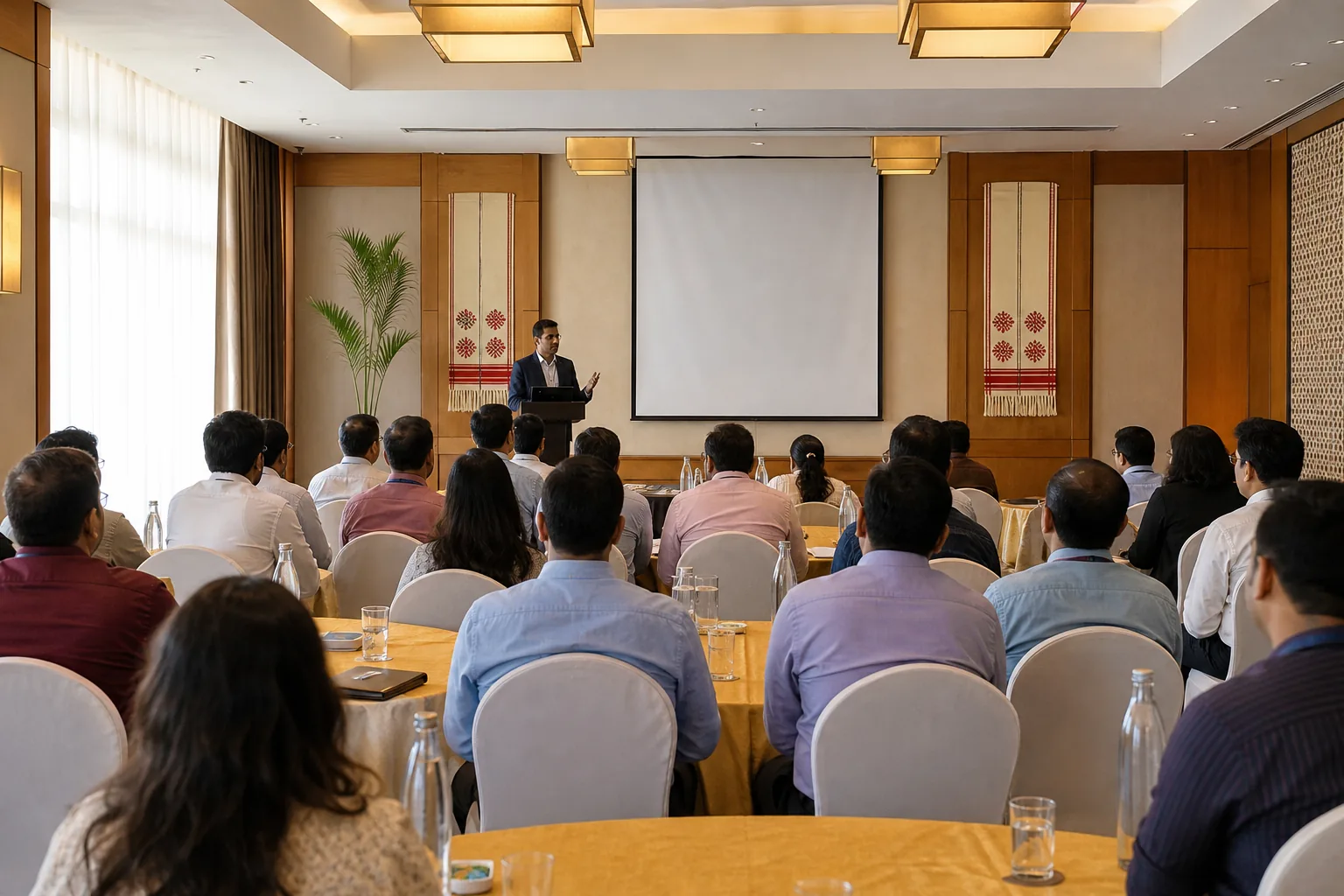
India’s MICE sector recorded 13% growth in 2024, but that single figure can’t tell an organiser how many events took place or what each attendee spent. Organisers can use MICE data to choose useful event measures and plan a Guwahati meeting.
How India’s MICE Data Is Defined
MICE stands for meetings, incentives, conferences and exhibitions. The term covers work gatherings with different aims: a team meeting may focus on decisions, while an incentive trip may reward staff or partners. Their budgets and measures of success won’t be the same.
A MICE report can provide a sector reference point. When reading any MICE statistic, first check what it counts. A report about business events may use a different scope from one about MICE tourism or the wider events industry.
That scope affects the meaning of a number. Event count is not the same as attendee count. A large exhibition may have many visitors, while a closed-door meeting may have a small group and a high value to its organiser. A growth rate also needs a clear base and period before it can guide a budget.
For a local planning process, define the event type, guest count and desired outcome before comparing figures. A corporate event planning checklist can help the team set those basics before it asks venues for costs.
Keep tourism spending separate from venue revenue, too. Delegate travel, rooms and food may sit in different budgets. Combining them without saying so can make a small event look larger or a venue seem more profitable than the data supports.
What Recent MICE Statistics Say About India
The clearest recent national figure in the available official material is a 13% growth rate for India’s MICE sector in 2024. The Press Information Bureau release reports that growth rate. It is a useful signal of activity, but it does not by itself tell a planner the market’s total value or the number of events.
That distinction matters. A percentage describes change against a base. To estimate the size of the market, a reader would also need a defined market value and a matching time period. To assess event volumes, the data would need a count and a clear rule for what qualifies as an event.
For organisers, the safest reading is narrow: the sector’s reported growth points to momentum, not a guaranteed increase in demand for every city or venue. National growth cannot predict the attendance, room nights or catering needs of one Guwahati conference.
Use the growth figure as context for planning, not as a forecast for your own event. Build your estimate from confirmed delegates, expected travel and the event’s purpose. If those inputs change, revise the budget rather than applying a national percentage to local costs.
Corporate Event Formats and Demand Signals
Corporate events don’t all create the same demand. A training day may need classroom seating and regular breaks. A leadership meeting may need a U-shape layout so people can speak across the room. A conference may need theatre seating to fit more attendees.
Hybrid access can be useful when some speakers or team members can’t travel, but it changes the event plan. Check who will run the online session and whether the venue setup supports the format you need. Treat this as a requirement to confirm, not an assumption about any venue.
Sustainability can also be built into the brief. For example, ask whether digital materials can replace printed handouts, and plan food quantities around confirmed attendance. These choices are easier to assess when the organiser records them as actions, rather than using a broad label without a clear measure.
Technology matters when it solves a task. A registration system may help track arrivals; a screen and sound setup may support a speaker. For each tool, name the person who will use it and what should happen if it fails. That simple check keeps technology tied to the event’s purpose.
Hotel Shiny Grand’s hall has layouts for 100 guests theatre-style, 70 for round-table dining, 60 classroom-style or 30 in a U-shape. Its meeting setup includes a projector and screen, sound system, microphone, whiteboard and Wi-Fi. Organisers comparing formats can use the Guwahati corporate events and conferences venue guide to think through venue fit.
How Organisers Should Read Event and ROI Figures
Start with the event’s purpose. If the goal is staff learning, attendance alone won’t show whether the session worked. If the aim is to meet clients, a useful measure may be the number of follow-up conversations that lead to a next step.
Choose a small set of measures before registration opens. A team might track confirmed attendees, actual attendance and post-event actions. Keep each measure tied to an owner and a time to review it. Otherwise, the figures may be collected but never used.
For a basic cost-per-attendee view, divide the agreed event cost by the number of people who attended. State what the cost includes. If it covers only the venue and catering, don’t compare it with a figure that also includes travel or accommodation.
ROI needs a clear outcome and a fair time window. A meeting that aims to generate sales may need follow-up data weeks later. A training session may use a later check on whether staff applied the material. Don’t claim an event caused a result unless the link is supported by your own evidence.
Economic impact is broader than a single event’s return. It may include visitor spending or supplier income, but those figures need a defined method and scope. For a local organiser, a useful first step is to keep the event budget separate from any estimate of wider economic effects.
National figures can set context. They can’t replace a post-event review. Record the estimate before the event, then compare it with the final attendance and the outcome your team chose.
Applying National Trends to a Guwahati Event
For an event in Guwahati, work from the actual guest list and the format. Ask how many people will attend in person, how many need rooms and whether the programme includes a meal. Then match the seating plan to the busiest part of the day.
Hotel Shiny Grand has a 100-guest air-conditioned banquet hall and 35 rooms on site. That can suit a mid-size meeting where some delegates are travelling in, but the room layout sets the usable limit. Theatre seating holds up to 100; round-table dining holds up to 70.
Costs should be read as a total, not as a single hire figure. Hall rental starts at ₹25,000 and may be waived for 60 or more guests. Catering is priced per plate: Silver at ₹650 to ₹750, Gold at ₹850 to ₹950, and Platinum at ₹1,100 to ₹1,250. Catering is available for any guest count, and applicable taxes are extra.
For a 100-person event, the food estimate is ₹65,000 to ₹75,000 for Silver, ₹85,000 to ₹95,000 for Gold, or ₹1,10,000 to ₹1,25,000 for Platinum. Add hall rental unless the package qualifies for a waiver. Ask for an itemised quote once the menu and layout are set.
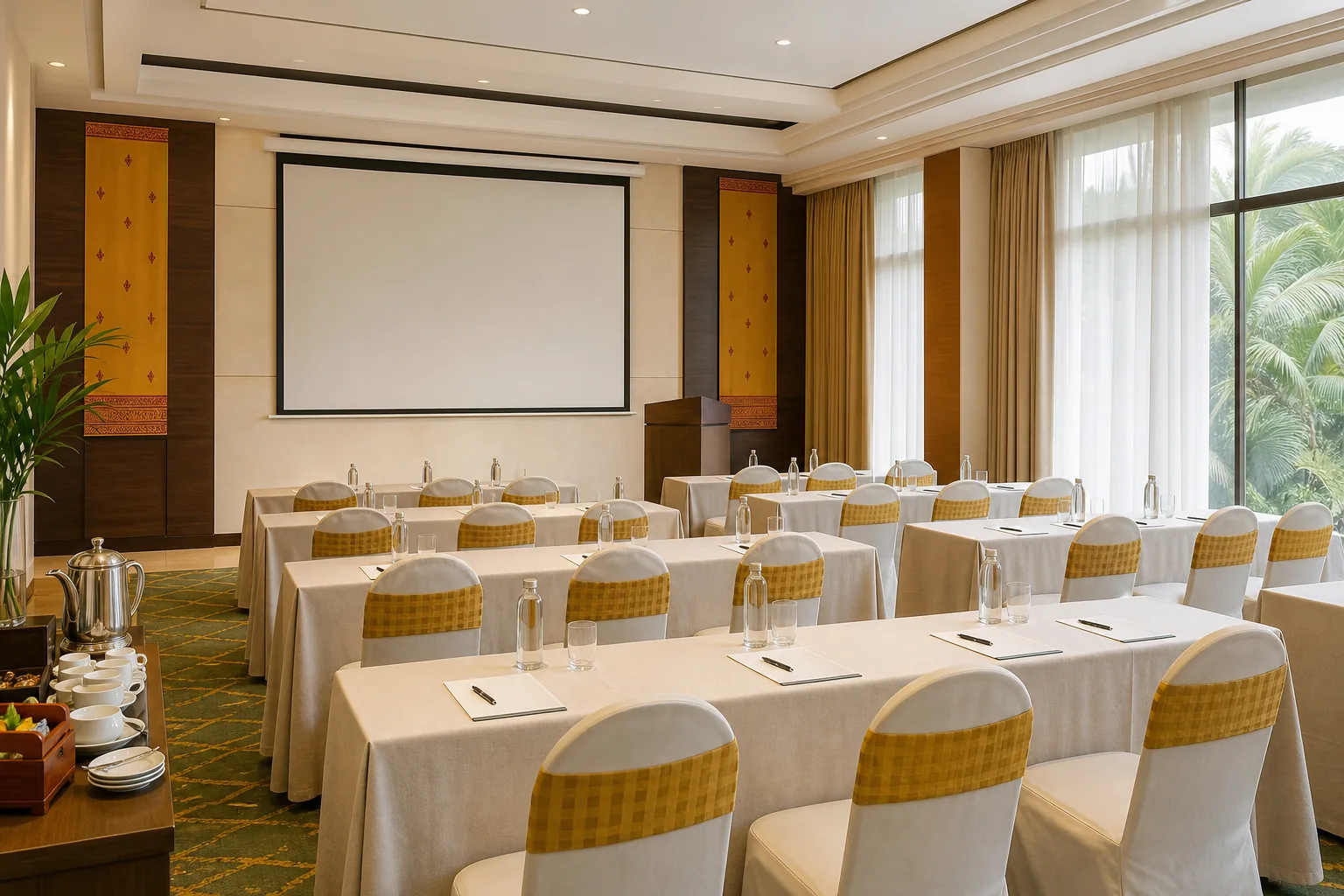
Use this decision table to match the event’s main task with the figures to confirm before booking:
| Event need | Planning check | Figure to confirm |
|---|---|---|
| Talk or presentation | Can every guest see the screen? | Theatre capacity, up to 100 |
| Group discussion | Will delegates need to face one another? | U-shape capacity, up to 30 |
| Training session | Does each attendee need a desk? | Classroom capacity, up to 60 |
| Meal with discussion | Will guests dine at round tables? | Dining capacity, up to 70 |
For a half-day corporate meeting, Hotel Shiny Grand’s packages start at ₹15,000 and are negotiable. They include a working lunch, tea and coffee, with GST invoicing available. Confirm the event schedule, meal needs and final layout together so the quote reflects the plan you’ll use.
When delegates are flying in, include travel access and overnight stays in the brief. Hotel Shiny Grand is near LGBI Airport and can host the meeting and room bookings at the same property. Check the venue’s current availability and final terms for your dates.
Frequently Asked Questions
What is the latest MICE growth figure for India?
The Press Information Bureau reported 13% growth for India’s MICE sector in 2024. That figure shows a growth rate for the stated period. It doesn’t tell you the value of the market, total event count or expected spend for a specific conference, so use local attendance and cost estimates for your own plan.
Does India’s MICE growth rate show the market’s total size?
No, a growth rate shows change, not total market size. To understand market value, a statistic needs a defined base value and period. Event counts also need a clear definition of what counts as a MICE event. Keep these measures separate when you build a business case.
How many people can Hotel Shiny Grand’s banquet hall hold?
Hotel Shiny Grand’s banquet hall seats up to 100 people theatre-style. It holds up to 70 for round-table dining, 60 in classroom layout and 30 in U-shape. The right limit depends on how the event will run, so choose the layout before confirming the guest count.
How much does corporate event catering cost at Hotel Shiny Grand?
Catering costs ₹650 to ₹750 per plate for Silver, ₹850 to ₹950 for Gold, and ₹1,100 to ₹1,250 for Platinum. Catering is available for any guest count. Hall rental starts at ₹25,000 and may be waived for 60 or more guests. Ask for an itemised quote based on your menu and layout.
Conclusion
Use India’s reported growth rate as background, then base your Guwahati event plan on confirmed guests, layout and itemised costs. For a meeting or conference at Hotel Shiny Grand, review the banquet hall details and event options and request a quote for your dates.
For official context, see the Ministry of Tourism, Government of India and the India Brand Equity Foundation. Figures change, so confirm current numbers at the source.