Home › Blog › Tourism’s Contribution to India’s Economy: Key Stats
Tourism’s Contribution to India’s Economy: Key Stats

Tourism brings money into many parts of India, but its economic footprint is harder to measure than visitor numbers suggest. The latest available tourism contribution to India’s economy statistics show a strong rebound in travel, alongside gaps that make some headline figures difficult to compare.
Here’s what the data says about GDP, jobs, foreign exchange, regional travel and public investment, plus what to keep in mind when reading the figures.
How Tourism’s Contribution to India’s GDP Is Measured
Tourism’s GDP contribution is not a count of hotel sales alone. It can include direct spending by visitors and indirect activity linked to that spending. A tourist may pay for a room, then spend on food, transport or a local service. The GDP estimate aims to capture a wider part of that chain.
A tourism measurement framework can help track activity across the wider economy. Estimates may vary by year and definition, and GDP share figures can split the total into direct and indirect contributions.
Direct and indirect contributions together make up the total. That split matters: a hotel’s room revenue is direct activity, while some of the spending connected to a visitor’s trip may be counted elsewhere in the economy.
Other tourism figures in circulation use different years, methods or definitions. One recent set of figures reports a 5.22% share for 2023 to 24, while other reported GDP values use currency totals and a different period. The available figures do not line up neatly. Don’t treat them as one continuous series or calculate a clean year-on-year trend from them.
A tourism measurement framework can help show how tourism activity is tracked across the wider economy. A share of GDP is also not the same thing as the number of trips, the number of visitors or the money spent by international guests.
When using a figure in a report or business plan, record its year and definition beside it. That small step can prevent a misleading comparison.
Tourism Jobs and Foreign Exchange Earnings
Tourism supports work across several kinds of business. Hotels need staff to run rooms and guest services. Visitor spending can also support transport, food service, guiding and local retail. The exact number of jobs depends on which roles and connected activities a measure includes.
Tourism-related employment can include both direct roles and work in connected services. International visitor spending is another measure of tourism’s economic contribution, but it should be read separately from employment estimates.
Foreign exchange earnings track spending by visitors from outside India. That money can reach accommodation, transport and other services during a trip. But a visitor-arrival count by itself does not show how long people stayed or how much they spent. Spending figures and arrival figures answer different questions.
It also helps to distinguish between foreign tourist arrivals and other international arrival measures. These figures should not be merged without checking their definitions. A broad arrival measure can count categories that a tourist-arrival measure handles differently.
Tourism jobs are spread across large and small operations. In Guwahati, for example, a visitor may use accommodation near the airport before travelling onward. Hotel Shiny Grand has 35 rooms and an in-house chef-led kitchen and restaurant. It is one example of how travel demand can support local hospitality work, though one property cannot represent employment across the country.
For businesses, a useful question is not only how many visitors arrive, but where their spending goes and how much local work it supports. National totals can show the scale. Local activity shows how that spending reaches communities.
Domestic and Inbound Tourism Across India’s Regions
Domestic travel accounts for a large volume of trips within India.
Trip counts and visitor counts are not interchangeable. One person may take more than one trip. A trip count can therefore be much higher than the number of distinct travellers. This distinction matters when comparing domestic travel with international arrivals.
India’s regions draw visitors for different reasons. People travel for heritage, nature, business, family visits and cultural events. The economic effect also varies by place. A destination with many visitors may have limited local accommodation, while another may see travel spend spread among small businesses and community services.
State-wise contribution figures need the same care as national GDP data. A visitor count for one state does not show that state’s share of tourism GDP. The denominator and measurement method matter. Ranking states using unlike measures would be misleading.
For visitors starting a Northeast India trip, Guwahati often works as a flight and road connection point. Their overnight stay may be short, but accommodation, meals and local transport still form part of the trip’s economic activity. Hotel Shiny Grand is in Borjhar near LGBI Airport, which can suit guests who want to stay near the airport before or after travel.
Planning the onward leg is part of the same visitor journey. For trips towards the park, this guide to travel from Guwahati Airport to Kaziranga explains why the destination range and road plan affect travel time.
For a fair regional comparison, look for the same measure across the same period. Domestic trips, foreign arrivals, visitor spending and tourism GDP each describe a different part of the picture.
Recovery, Recent Growth and the 2025–2030 Outlook
International arrivals rose sharply after pandemic travel restrictions eased. Arrival totals and foreign tourist arrivals are distinct measures, so their definitions should be checked before comparing them. A change in one measure does not necessarily show the same change in another.
Tourism’s contribution to GDP and international visitor spending describe different aspects of the sector. Figures from separate summaries may not be directly comparable, so read them with their definitions and reporting periods in mind.
That distinction helps explain apparent mismatches between estimates. Different periods, units or methods can produce totals that do not align. Don’t treat unlike measures as evidence of a particular trend.
The source material also has gaps. The GDP-share percentage is not available for each year in the comparison, and domestic-trip data for 2024 is absent. So the available figures are useful indicators, not a single, fully aligned time series.
For the years ahead, forecasts can help businesses think about demand, but they are not observed results and do not guarantee that each destination will see the same growth.
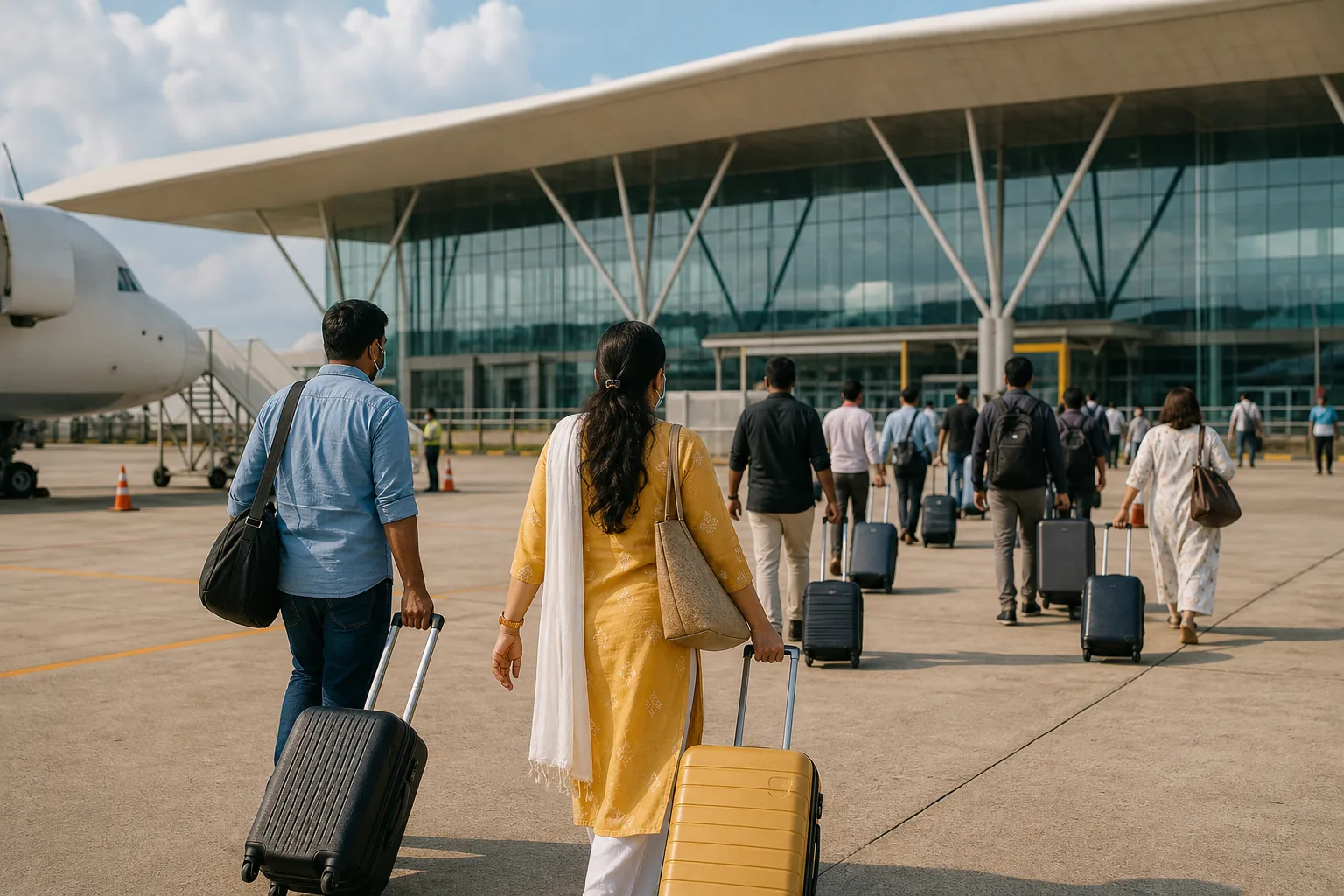
At a local level, more travel can mean more demand for rooms near airports, transit points and event venues. But demand still depends on route access, seasonal conditions and the reason for travel. Hotel Shiny Grand’s airport-side location and room options are relevant to guests passing through Guwahati, while the wider growth figures describe a national market.
Use forecasts as planning inputs, then check current local demand before making a large investment. National growth does not remove the need to test a destination’s own conditions.
Government Initiatives, Digital Tourism and Flagship Projects
Public tourism projects aim to improve the visitor experience and support travel across more destinations. Public investment can support destination development, pilgrimage sites, infrastructure and state capital investment.
Tourism initiatives may involve beach facilities, heritage work, convention centres, adventure activities and tribal homestays. These do not all serve the same market. A conference venue has different needs from an eco-tourism site, so progress should be judged against each project’s stated purpose.
Digital tools are another part of public tourism efforts. A public travel-information platform can provide information in multiple languages. Digital promotion, e-visa access, multilingual tourist helplines and certification for tourist facilitators can also support visitors.
For travellers, a central information platform can help bring trip details into one place. For tourism businesses, digital visibility can make it easier for visitors to find current information before travel. But a platform alone cannot fix gaps in local transport, facilities or staff capacity. Those parts still need work on the ground.
Connectivity also shapes which places visitors can reach. Better access can support a destination, but local services have to be ready for visitors when they arrive.
Flagship projects are most useful when they link visitor access with local services. A site needs clear arrival information and facilities that fit its visitor flow. Businesses near airports, including Hotel Shiny Grand, meet a different need: a room, meal or event space for people travelling through Guwahati.
When checking a project announcement, note the scheme, location and intended use. A sanctioned budget shows an approved commitment, not by itself the number of visitors or jobs that a project will later generate.
Tourism Investment, Hospitality and FDI
Tourism investment can include hotels, visitor facilities, transport links and services that help destinations host travellers. The right opportunity depends on the type of demand. A business serving airport transit guests has a different operating pattern from a property near a leisure destination.
Foreign investment can support tourism and hospitality projects, though the scale and terms depend on the project. Investment figures can use different periods and projections, so investors should check the full definition and date before using them in a financial model.
For a hospitality project, start with the guest need and the service it requires. Airport stays may depend on late arrivals, early departures and short booking windows. Event venues need suitable room layouts and catering capacity. A hotel that serves both segments has to plan staffing and space around each one.
Hotel Shiny Grand has a 100-guest air-conditioned banquet hall as well as guest rooms. Its catering is available for any guest count, tailored to your requirements, and hall rental starts from ₹25,000, with the fee waived for 60 or more guests. Those details show how accommodation and events can sit under one roof, but they do not define the economics of the wider sector.
Anyone assessing a hotel’s business-travel fit should check the needs of the actual trip. A work desk, Wi-Fi, airport access and billing may matter more than leisure facilities for a short business stay. The business hotel planning checklist for Guwahati covers the factors a traveller or admin team can review before booking.
Investment decisions also need a clear view of operating costs and guest demand. National forecasts can frame the opportunity; they cannot replace a local review of access, seasonality, event demand and the services a property can deliver.
Challenges, Inclusive Growth and Tourism’s Wider Economic Role
More visitors do not automatically mean that every community gains in the same way. Tourism income depends on how much visitors spend locally and whether local businesses can serve them. In smaller towns, access to transport, trained staff and basic visitor facilities can shape how much value stays in the area.
Environmental pressure is another concern. Destinations need to manage visitor use in ways that protect natural and cultural sites. Plan for the place, not only for expected visitor numbers.
Skills also matter. A tourism business needs staff who can meet the needs of its guests, whether they are arriving late, travelling with family or attending a work event. Training can help tourism workers develop the skills needed to support visitors. That work can support visitors, while local employers still need to train for their own services.
Inclusive growth is easier to assess when local participation is visible. Look at whether nearby businesses can supply goods or services, whether local people can access tourism jobs and whether visitors have a reason to stay longer. These questions give a more useful view than counting arrivals alone.
Tourism also connects with activity beyond accommodation. Visitor spending can reach food service, travel and local shopping. A room booking near Guwahati Airport, for example, may be part of a longer trip into Assam or the wider Northeast. For travellers comparing room costs, Hotel Shiny Grand lists direct-booking rooms from ₹2,500 per night, with taxes extra. Direct bookings include breakfast, Wi-Fi, parking and a one-way airport transfer.
Hotels also need to explain the tax part of a bill clearly. The GST rules for hotel rooms in India can help guests understand how tax applies to a room tariff.
Good tourism growth should be judged by more than one headline number. Track who benefits, whether the place can handle visitor demand and whether the activity can continue without damaging the assets that draw people there.
Frequently Asked Questions
How much does tourism contribute to India’s GDP?
Tourism contributes to India’s economy through visitor spending and activity across related businesses. Estimates can differ depending on the year, methods and activities included, so check these details before comparing figures.
How many jobs does tourism support in India?
Tourism supports work across accommodation, transport, food services and other parts of the visitor economy. Job estimates may cover different activities, so they should not be read as a count of people working only in accommodation.
How many international tourists visited India in 2024?
Arrival totals can differ depending on how a source defines and counts visitors. Check the measure and reporting period before using a figure or comparing it with another total.
How much foreign exchange does tourism earn for India?
Visitor spending and foreign exchange earnings are related but may be reported using different measures. Check the source’s definition, currency basis and reporting period before making a comparison.
What is the outlook for India’s tourism sector by 2030?
Forecasts are not confirmed outcomes. Businesses can use projections to frame demand planning, while assessing local access, services and visitor patterns for each destination.
Conclusion
India’s tourism sector is large, but its headline figures use different measures and time periods. Treat GDP, arrivals, jobs and spending as related indicators, not interchangeable totals. For a Guwahati airport stay, check the room details and direct-booking inclusions on Hotel Shiny Grand’s website before you book.